Australia's Highest Paying Gold Buyers $$$


A Tutorial on How Gold Buyers Test Gold- What Actually Happens in the Store
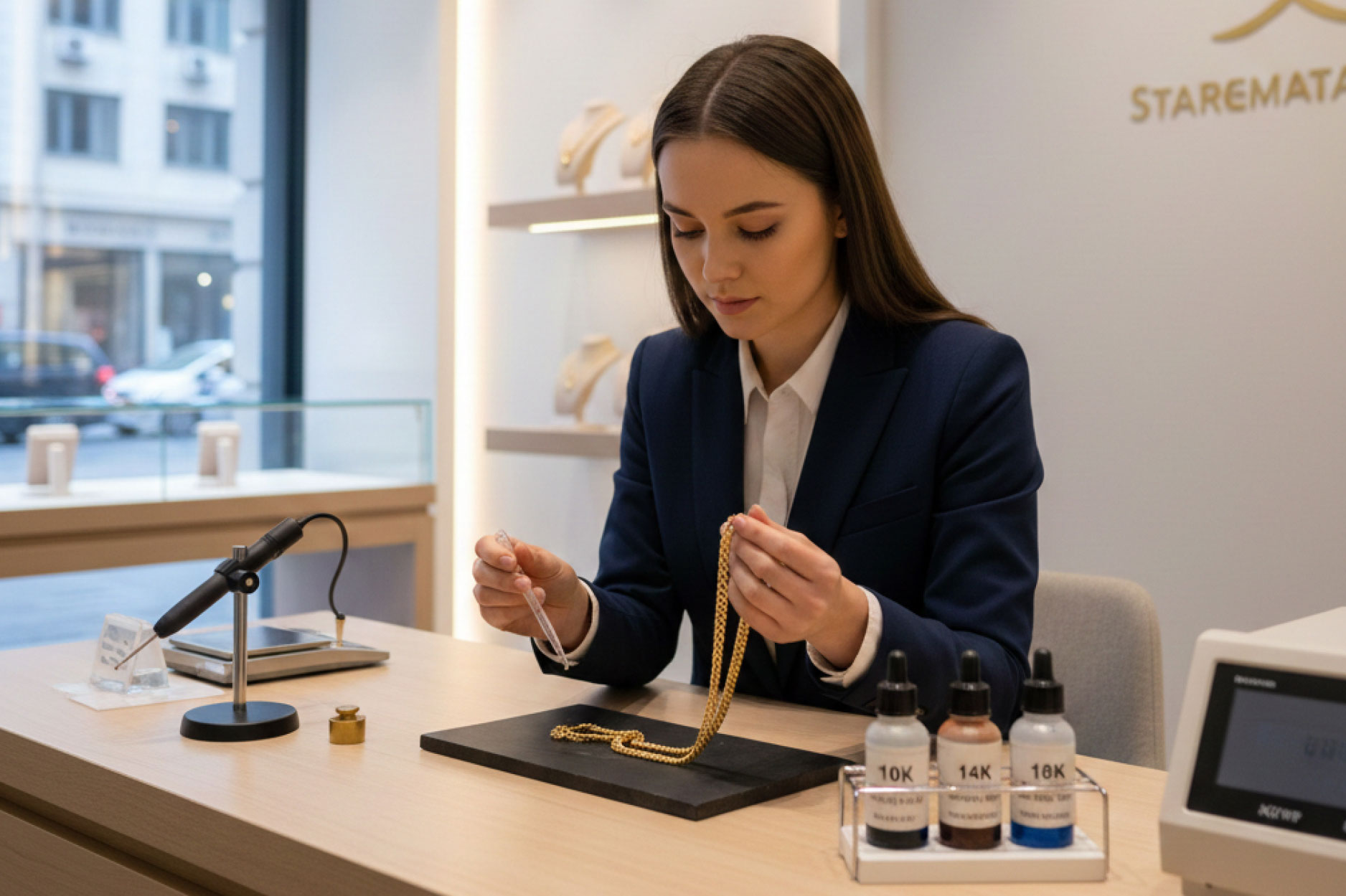
If you plan to sell your gold, you may wonder what really happens inside a gold-buying store. Do they melt your jewellery? Do they scratch it? Do they use chemicals? Many sellers feel nervous because they don’t know how gold testing works.
This guide explains everything in very simple English. You will learn how professionals check your gold, what tools they use, and how you can understand the results. When you know the process, you feel more confident and avoid unfair offers.
Understanding the Testing Process: What Buyers Check First
Why Testing Matters
Gold testing helps the buyer know whether your item is real and how pure it is. Without proper testing, they cannot offer you the correct price. A small difference in purity can change the value by hundreds of dollars.
What a Buyer Looks For Before Testing
Before using any tool, gold buyers inspect your jewellery, coin, or bullion with their eyes. They check:
The overall shape
Colour and shine
Whether the item looks plated
Whether the clasp or chain looks suspicious
This first step helps them decide which test to perform next.
Visual Inspection: The First and Fastest Test
Checking for Hallmarks
Most real gold pieces come with stamps such as:
24K, 22K, 18K, 14K
999, 916, 750
The buyer uses a magnifier to locate these marks on the inner or hidden parts of the jewellery. A missing hallmark does not always mean fake gold, but it means more testing is needed.
Spotting Wear and Plating
Buyers often look for:
Fading colour
Scratched corners
Chips that reveal a different metal underneath
If the inside looks different from the outside, the piece may be gold-plated.
Comparing Colour
Different karats have different colours:
24K: Deep yellow
22K: Bright yellow
18K: Slightly lighter
14K: Paler yellow
Trained buyers can often estimate purity just by colour before doing any scientific test.
Magnet and Density Checks: Simple but Useful Tests
Magnet Test
Gold is not magnetic.
If your item sticks strongly to a magnet, it is not pure gold.
Buyers use a high-strength magnet to quickly rule out fake items.
Density Test for Coins and Bullion
This test checks whether the gold is the correct weight for its size.
Real gold is very dense. If the weight does not match the standard, it might be mixed with cheaper metals.
Why These Tests Are Not Final
These tests help buyers save time, but they cannot confirm purity. They only help identify obvious fakes.
Touchstone and Acid Testing: The Traditional Method
This is one of the most common tests used in many jewellery shops. It is accurate, fast, and suitable for most gold jewellery.
How the Scratch Test Works
The buyer rubs your gold lightly on a black touchstone.
The mark on the stone shows the colour and strength of the metal.
They apply a small drop of acid next to the mark.
Different acids are used for different purities (10K, 14K, 18K, 22K).
The reaction shows whether the gold mark fades, changes colour, or stays stable.
Does Acid Testing Damage Your Gold?
Only a gentle scratch is made, usually on a hidden part of the jewellery.
Good gold buyers try to minimise any visible marks.
What the Buyer Learns from This Test
Whether the item is real
What karat it might be
Whether it is plated or mixed
Acid testing is trusted by many professionals. However, for very high-value items, buyers use advanced machines for even more accuracy.
Electronic Gold Testing: Fast and More Accurate
Many modern gold buyers use electronic testers because they are easy, safe, and provide instant readings.
How Electronic Testing Works
The gold buyer:
Cleans a small spot on the gold surface.
Applies a conductive gel (if required).
Touches the probe to the metal.
The device gives a reading showing the karat or purity range.
What This Test Can Detect
Surface purity
Whether the gold is real or plated
Differences between 14K, 18K, 22K, and 24K
Limitations
Electronic testers read only the surface layer.
So, for thick plating, additional testing is needed.
XRF Testing: The High-Tech Method Used by Top Gold Buyers
XRF (X-ray Fluorescence) machines are now very common in professional gold-buying stores. This test is fast, accurate, and completely non-destructive.
How XRF Testing Works
he machine fires low-level X-rays into the item.
The gold and alloy metals reflect different energies.
The machine analyses the reflection and shows the exact purity.
Why Buyers Prefer XRF
No scratching
No chemicals
Very accurate
Shows detailed metal composition
What You See on the Screen
What You See on the Screen
The screen usually displays:
Gold percentage (e.g., 91.6% for 22K)
Other metals like silver, copper, nickel, zinc
Total weight
Halfway through the process, many customers decide to sell gold in Australia because the results are transparent and easy to understand.
Weighing and Pricing: How Buyers Calculate Your Final Value
Once the gold purity is confirmed, the next step is weighing and calculating the price.
Digital Scales for Precision
Professional buyers use certified digital scales that show:
Grams
Milligrams
Tare weight
This ensures no mistake in measuring.
How Gold Buyers Calculate the Final Price
The formula is simple:
(Purity % × Weight × Current Gold Price) − Business Margin = Final Offer
Good gold buyers explain the calculation in front of you so you feel safe and informed.
Why Today’s Gold Price Matter
Gold price changes every day.
Reputable buyers use live market rates from trusted sources like:
LBMA
MCX
Global spot gold charts
Testing Gold in a Store: What to Expect as a Customer
The Full Process Usually Takes 5–10 Minutes
A typical testing session includes:
Greeting and initial inspection
Hallmark checking
Testing with acid, electronic tester, or XRF
Weighing
Price explanation
Payment
Printed invoice
You Should Always Expect Transparency
reliable gold buyer will:
Test your gold in front of you
Explain every step
Show machine readings
Never take your items into a back room
Ask These Questions Before Selling
“Which testing method will you use?”
“Can you show me the purity reading?”
“Do you follow today’s gold price?”
“Is there any deduction or melting fee?”
If the buyer avoids your questions, go to someone more trustworthy.
Final Thoughts
Understanding how gold buyers test gold helps you make smarter decisions, avoid scams, and get the right value for your gold. Modern testing methods like electronic and XRF machines make the process fast, transparent, and safe.
If you plan to sell your jewellery, coins, or bullion, choose a buyer who shows you every step of the testing process and explains the results clearly. With the right knowledge, you can walk into any store with confidence and walk out with a fair price.
Written By
Team Times&Gold
Journal Insights


Visit Us in Parramatta!
NO APPOINTMENTS NEEDED!
Located inside DLUX Jewellers
Opposite Commonwealth Bank