Australia's Highest Paying Gold Buyers $$$


How to Avoid Lowball Offers When You Sell Jewellery Sydney
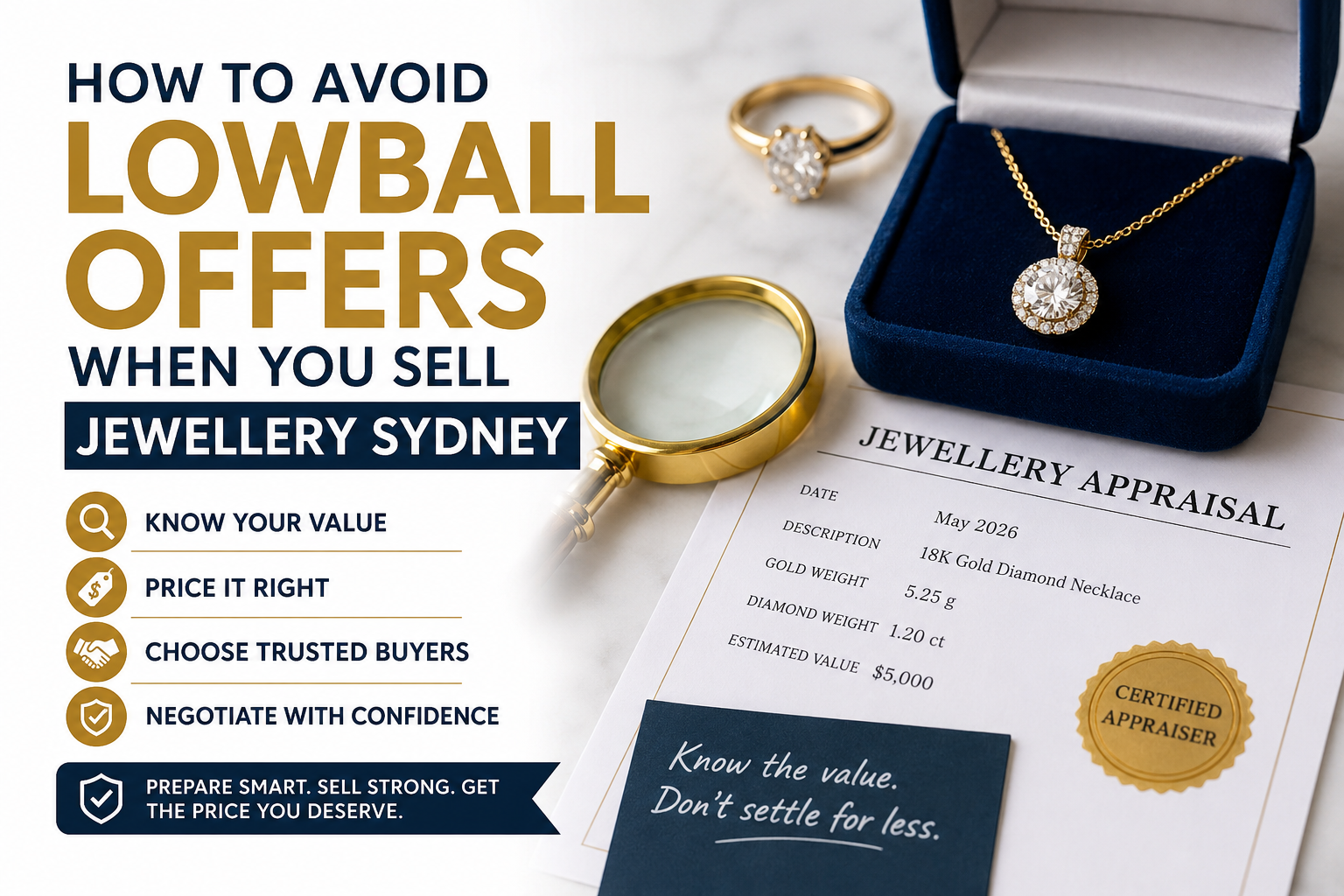
Selling jewellery can feel exciting at first. You may think your old necklace, gold ring, or diamond earrings will bring a great price. But many sellers quickly face a big problem — lowball offers.
Imagine getting only $500 for a necklace that is actually worth $5,000. Sadly, this happens very often. In 2025, around 65% of online jewellery sellers received offers that were 40% below market value, according to Gemological Institute data.
If you want to sell jewellery Sydney buyers will respect, you need the right strategy. The good news is that you can avoid unfair offers with smart preparation, proper pricing, and confident negotiation.
This guide will show you simple steps to help you get the best possible value for your jewellery.
Know Your Jewellery’s Real Worth
Before you sell anything, you must understand what your jewellery is truly worth. Many sellers lose money because they guess the value instead of checking professionally.
Get a Professional Appraisal First
One of the smartest things you can do is hire a certified gemologist for an appraisal. This usually costs between $50 and $200, but it can save you thousands of dollars later.
A professional appraisal gives you:
A clear market value
Details about gemstones and metals
Proof to show buyers
Confidence during negotiation
Jeweller Mark Ellis says:
“Appraisals stop lowballs cold.”
Search online for “GIA-certified appraisers near me” and book an appointment before listing your jewellery.
If you also plan to sell gold, an appraisal becomes even more important because gold prices change regularly.
Check Current Market Prices
After your appraisal, compare similar jewellery online. This helps you understand what buyers are actually paying.
Good places to check include:
eBay sold listings
Etsy vintage jewellery sales
Auction websites
For example, one seller priced a gold ring at $1,200 after checking similar sold listings. A buyer offered $1,150, and the seller confidently accepted because they knew the market value.
Here are a few quick tips:
Track gold prices regularly. Gold prices are around $2,400 per ounce in May 2026.
Watch current trends. Vintage jewellery prices have increased by nearly 20% this year.
Compare pieces with similar age, size, and gemstones.
The more research you do, the harder it becomes for buyers to trick you with unfair offers.
Understand the Main Value Factors
Not all jewellery is valued the same way. Some pieces become more valuable because of their history, rarity, or condition.
Important value factors include:
Age of the jewellery
Hallmarks or maker stamps
Gemstone quality
Metal purity
Overall condition
Brand name
For example, a seller owned a 1920s brooch that was appraised at $3,000. A buyer tried offering only $800. Luckily, the seller had already learned about the brooch’s rare diamonds and rejected the low offer.
Before getting a valuation:
Clean your jewellery carefully
Take clear photos
Keep original boxes or certificates if possible
Small details can increase value significantly.
Price Smart and Stand Firm
Pricing is one of the biggest reasons sellers receive lowball offers. If your price is too low, buyers will push even lower. If it is too high, your item may never sell.
Set a Fair Starting Price
A good rule is to list your jewellery about 20–30% above your minimum acceptable price.
This gives you room to negotiate while still protecting your profit.
According to Jewelers Board data, one in three underpriced listings attracts aggressive lowball offers.
You can also use this simple pricing formula:
Appraisal Value × 0.7 = Quick Sale Price
For example:
Appraisal value: $5,000
Quick sale price: $3,500
This formula helps create realistic expectations while still avoiding huge losses.
Learn Buyer Trends
Timing matters when selling jewellery.
Certain seasons bring more buyers and stronger offers. For example:
Engagement ring sales increase during spring and holidays
Bridal jewellery demand rises before wedding season
Luxury sales often slow during summer
One seller waited for the June bridal rush in 2026 before listing a diamond bracelet. The final offer was 25% higher than offers received earlier in the year.
Helpful timing tips:
List jewellery mid-week for better online visibility
Use round pricing like $995 instead of odd numbers
Avoid major holiday weekends when buyers are distracted
Patience often leads to better offers.
Ignore Impulse Lowball Offers
Many buyers send very low first offers hoping sellers are desperate.
Do not panic.
First offers are often 50% below asking price. Instead of replying immediately, wait at least 48 hours before making a decision.
Auction expert Lisa Grant explains:
“Patience wins fair deals.”
Lowball buyers often disappear when they realize you understand your jewellery’s value.
Stay calm and professional.
Pick the Right Selling Spot
Where you sell your jewellery matters almost as much as the jewellery itself.
Some platforms attract serious buyers. Others attract bargain hunters looking for cheap deals.
Use Reputable Online Platforms
If you have valuable jewellery, choose trusted selling platforms.
Popular options include:
1stDibs
Chairish
Worthy
eBay luxury categories
Avoid risky platforms like Craigslist when selling expensive items.
A 2026 report showed that auction-style jewellery websites produced 15% higher prices than Facebook Marketplace.
Before listing:
Create a verified seller profile
Upload high-quality photos
Write detailed descriptions
Include appraisal information
Professional listings build trust quickly.
Consider Local Jewellers or Consignment Shops
Sometimes local jewellery shops offer a safer and easier selling experience.
Consignment shops usually take a 30–50% commission, but they handle negotiations and lowball buyers for you.
One widow sold several estate rings through a trusted jewellery store. Online buyers offered only $6,000 total, but the local shop eventually sold the collection for $12,000.
Here is a quick comparison:
Option
Pros
Cons
Online Selling
Bigger audience
More lowball offers
Local Jewellers
More trust and support
Lower final profit after commission
Choose the option that matches your comfort level and timeline.
Try Auctions for Rare Pieces
If you own rare or luxury jewellery, auctions can work very well.
Auction sites like Sotheby’s Online Auctions create competition between buyers, which can increase the final sale price.
For example, one pearl necklace received multiple bids at auction and finally sold for $8,500 after private buyers had only offered $4,000.
Auctions work especially well for:
Estate jewellery
Vintage collections
Designer brands
Rare gemstones
Competition can completely change the value of your sale.
Handle Offers Like a Professional
Knowing how to respond to buyers is one of the best ways to avoid losing money.
Watch for Lowball Red Flags
Some buyers clearly show warning signs.
Common red flags include:
Vague questions
Rushed payment offers
Pressure to sell immediately
Requests to avoid official platforms
“As-is” purchase demands
According to FTC 2026 data, around 40% of lowball offers came from unverified buyers.
Always ask buyers for proof of identity or verified payment details before continuing.
Trust your instincts.
Negotiate with Confidence
Strong negotiation skills help protect your jewellery’s value.
Instead of accepting low offers quickly, counter with a fair response.
A good strategy is to counter about 10–15% below your asking price.
Broker Tom Reed says:
“Know your floor, never dip below.”
Here are simple scripts you can use:
“Thanks, but similar pieces sell for at least $2,000.”
“My best offer is $1,800.”
“The appraisal supports my asking price.”
Keep your tone polite but firm.
Serious buyers respect confident sellers.
Walk Away When Needed
Sometimes the best decision is saying no.
If buyers continue offering unfair prices, relist your jewellery after seven days or adjust your selling platform.
One seller rejected a $300 offer for diamond earrings. After relisting with better photos and a stronger description, the earrings sold for $750.
Never feel forced to accept less than your jewellery deserves.
There will always be another buyer.
Final Thoughts
Lowball offers can be frustrating, but they are avoidable when you prepare properly.
Remember these key steps:
Get a professional appraisal
Research current market prices
Price your jewellery smartly
Choose trusted selling platforms
Negotiate with confidence
Walk away from unfair offers
According to a 2026 seller survey, people who follow these steps earn nearly 30% more on average.
Whether you want to sell vintage diamonds, estate pieces, or sell gold, knowledge is your biggest advantage.
Written By
Team Times&Gold
Journal Insights

Visit Us in Parramatta!
NO APPOINTMENTS NEEDED!
Located inside DLUX Jewellers
Opposite Commonwealth Bank