Australia's Highest Paying Gold Buyers $$$


Cash for Gold vs Jewellery Buyback in Australia: Which Pays More?
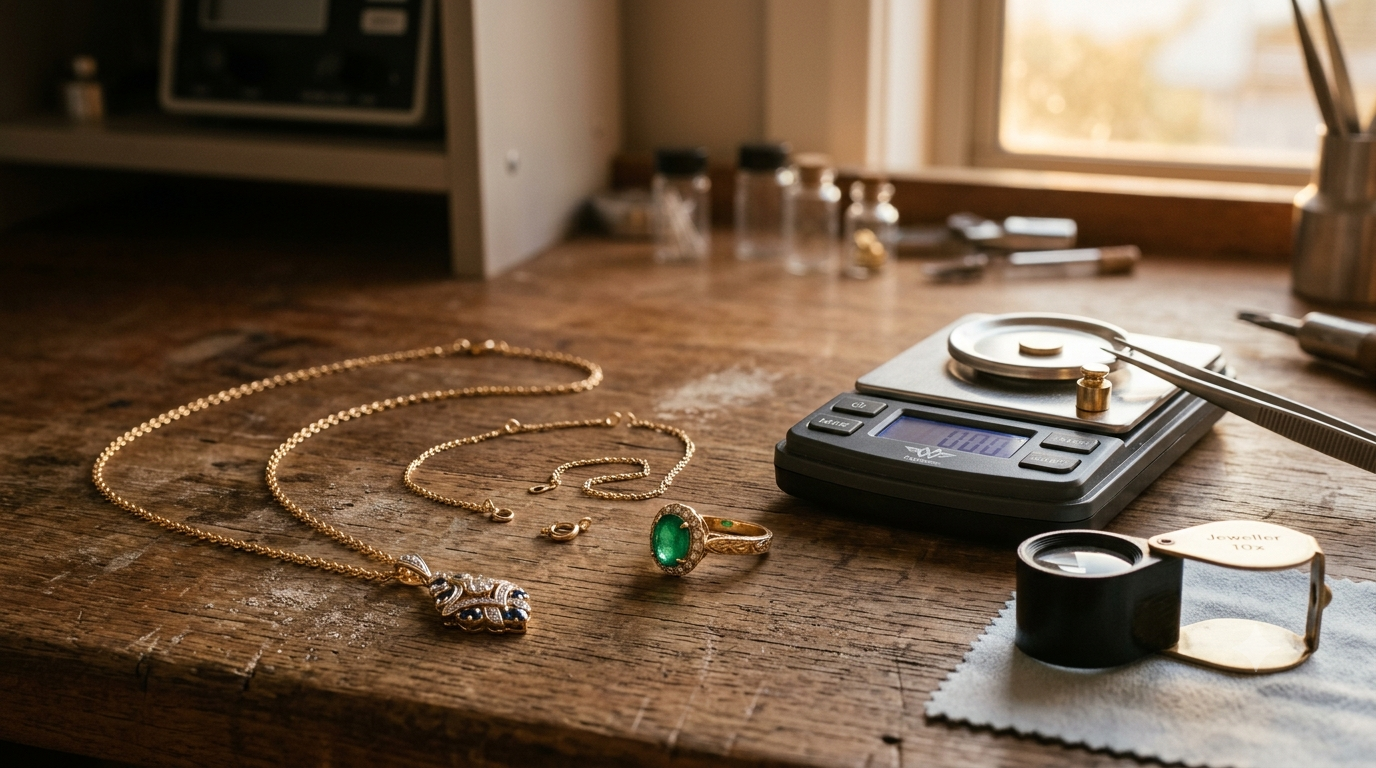
You've got a drawer of jewellery you don't wear anymore. Maybe it's a tangle of broken chains, a ring that doesn't fit, or your grandmother's old brooch. Before you walk into the first shop with a "We Buy Gold" sign in the window, it's worth understanding something most sellers never think about: you're not selling one type of product — you're choosing between two completely different pricing models.
Cash for gold buyers pay for the metal. Jewellery buyback programs pay for the piece. Mix them up, and you could either get lowballed on a designer item or waste weeks waiting on a buyback quote for a chain that was only ever worth its scrap weight.
This guide breaks down exactly how each model works, what typically drives the price gap between them, and how to figure out which pile your jewellery box actually belongs in. If you'd rather skip the guesswork, Time & Gold offers same-day quotes against the live spot rate, tested and weighed in front of you.
Table of Contents
How Cash for Gold Services Value Your Items
How Jewellery Buyback Programs Work
Key Differences in Payout Structures
Deciding Which Path to Take
Legal and Tax Considerations When Selling Gold in Australia
Red Flags to Watch For
Common Mistakes Sellers Make
FAQs
Final Verdict
How Cash for Gold Services Value Your Items
A cash for gold buyer doesn't care whether your ring is pretty, whether it's on trend, or whether a designer name is stamped inside. They're buying weight and purity, full stop. Everything else — the design, the craftsmanship, the sentimental story — gets ignored in the calculation.
The Scrap Metal Calculation
The maths behind every scrap gold quote comes down to three inputs:
Weight, measured in grams (most Australian buyers use grams, though some old-school jewellers still quote in pennyweights)
Current spot price of gold, and sometimes platinum or palladium if your piece contains it
Purity, expressed as karats — 9k, 10k, 14k, 18k, or 24k (pure gold)
As of mid-2026, the AUD gold spot price has been swinging fairly widely, averaging around $6,600 per ounce for 24-karat gold across the year, with a low near $5,682 per ounce in July. That volatility partly ties back to real interest rate movements. In practical terms: the number a buyer quotes you today could be noticeably different from the number they'd quote next month, so always ask for the day's rate rather than relying on a figure you saw a few weeks ago — you can check Time & Gold's live rate card before heading in.
A reputable buyer will convert that ounce price down to a per-gram rate for each karat and multiply it by your item's weight. A 14k chain, for instance, is only 58.5% pure gold, so its melt value sits well below what a 24k rate might suggest at first glance.
The Refining Process
Once a scrap buyer takes ownership of your jewellery, most of it doesn't get resold as-is. It gets melted down and refined.
Gemstones are removed first. Diamonds, sapphires, and other stones have zero value to a smelter, so they're popped out before melting — which is also why scrap buyers rarely pay extra for the stones in a piece unless they buy them separately.
Refineries take a margin. The buyer you deal with typically isn't running the smelter themselves; they're selling bulk scrap on to a refinery, which charges a processing fee and takes its own cut before returning pure bullion.
This is exactly why broken or damaged jewellery fits the scrap model. A snapped clasp or a mangled setting doesn't reduce melt value at all — the gold content is identical — but it would tank the resale value of an intact piece. If your item is already broken, scrap is usually the sensible route.
Expert Tip: Ask to see the scale zeroed and calibrated before your items go on it, and ask what spot price they're using that day. A shop with nothing to hide will show you both without hesitation.
Fast Payout Trade-offs
Speed is the biggest selling point of cash for gold, and it comes at a cost.
Walk-in scrap buyers typically pay somewhere in the range of 65–85% of the pure melt value, depending on the buyer's margin and how competitive the local market is. In return, you get paid on the spot, no waiting, no negotiation with a third party.
Case study: Say you bring in a broken 14k gold chain weighing 12 grams. At a 24k spot price of roughly $187 per gram, the melt value of a 14k item works out to about $1,311 (12g × $187 × 0.585). A buyer offering 75% of melt would hand you around $983, in cash, in the time it takes to test and weigh the piece.
Mail-in gold kits — the postal envelopes advertised heavily online — tend to sit at the lower end of that percentage range, and a few common pitfalls come up again and again:
You lose the chance to watch the weighing and testing happen
Payment is issued after the company receives and grades your item, based entirely on their own assessment
Some kits bundle a flat "postage insurance" fee that quietly eats into your payout
Disputing a low offer after you've already posted the item is far harder than negotiating in person
If you're going to use a mail-in service, photograph and weigh your items yourself first, and check reviews specifically mentioning payout disputes.
How Jewellery Buyback Programs Work
Jewellery buyback services think about your item completely differently. They're not asking "how much gold is in this," they're asking "who will buy this exact piece, and for how much."
Brand and Designer Premiums
A hallmark changes everything in the buyback world.
Recognisable brands like Cartier, Tiffany & Co., Van Cleef & Arpels, or Bulgari carry a resale premium that has nothing to do with metal content. Buyers are pricing in brand recognition, craftsmanship reputation, and resale demand.
Demand shifts with trends. Certain styles — bold Art Deco pieces, 1990s Tiffany designs, and specific vintage Cartier collections — have seen renewed collector interest heading into 2026, which pushes buyback offers upward for those specific categories, independent of the gold price that week.
Provenance matters. Original boxes, certificates, and purchase receipts can genuinely move the offer. A ring with its original papers will often fetch more than an identical, unpapered piece, because the papers reduce the buyer's authentication risk and speed up resale.
The Resale Margin
Here's the part most sellers get wrong: retail price is not a fair benchmark for what you'll be offered.
Boutiques and resale platforms price items for what a new buyer will pay, which includes their overhead, marketing, staff, and profit margin. The gap between what a buyback service pays you (wholesale) and what they'll eventually list the item for (retail) is often substantial — frequently somewhere between 40% and 60% of eventual resale price, depending on the category and how quickly the piece is expected to sell.
Expert Insight: "Retail value" printed on an old insurance appraisal is almost always a myth when it comes to resale. Appraisals are written to justify replacement cost for insurance purposes, not to reflect what anyone would actually pay you for a used piece. Don't be surprised — or insulted — when a buyback offer comes in well under that number.
Curation and Rarity
Some jewellery is worth chasing a buyback offer for specifically because of what it isn't — melted down.
Vintage cuts and rare gemstones (old European cut diamonds, natural unheated sapphires, certain coloured diamonds) can be worth multiples of their raw material value to the right specialist buyer.
Comparison point: A 1920s Art Deco ring with a 1-carat old mine cut diamond and a 14k setting might have a scrap melt value of a few hundred dollars, but a specialist buyback dealer chasing period pieces could pay several thousand for the same ring intact — because collectors want the whole design, not the raw materials.
This is the category where taking the item to a scrap buyer would genuinely be leaving money on the table.
Key Differences in Payout Structures
Melt Value vs Market Value
Think of melt value as the floor and market value as the ceiling.
Factor
Cash for Gold (Melt Value)
Jewellery Buyback (Market Value)
What's being priced
Raw metal weight × purity
Brand, design, rarity, condition
Price driver
Daily spot price
Collector and retail demand
Typical payout
~65–85% of melt value
Highly variable — can be below or well above melt
Best for
Broken, generic, unbranded items
Branded, vintage, or gem-set pieces
Speed
Instant
Days to weeks
The gap between the two can be enormous. An unbranded 18k gold band might sell for close to its melt value either way. A signed vintage Cartier bracelet, on the other hand, could fetch several times its melt value through a specialist buyback channel — which is exactly why sending it to a scrap buyer by mistake is such an expensive error.
Speed of Transaction
Gold kiosks and pawn-adjacent buyers built their entire business model around instant payouts — test, weigh, quote, pay, all in one visit. Consignment and luxury buyback services work differently: they often need time to research comparable sales, verify authenticity (sometimes sending items to a brand for verification), and in the case of consignment, actually wait for a buyer before you get paid at all.
If you need cash today, that timeline difference alone might decide which route you take.
Risk and Transparency
Whichever path you choose, three risk areas come up over and over:
Scale verification — insist on seeing the item weighed on a calibrated scale, ideally one you can watch zero out before your piece goes on it.
Hidden fees in buyback contracts — some consignment agreements bury commission rates, "handling fees," or return-shipping charges deep in the fine print. Read the full agreement, not just the headline percentage.
Gemstone under-grading — a buyer with an incentive to lower your payout may quietly downgrade a stone's clarity or call a natural stone "treated" without proper testing. If a piece has real gemstone value, get an independent grading report before you sell.
Deciding Which Path to Take
When to Choose Cash for Gold
The piece is broken, tangled, or missing parts
There's no brand name, hallmark, or sentimental story attached
You need money today and aren't chasing top dollar
It's mismatched odds and ends — single earrings, old dental gold, scrap findings
When to Choose Buyback Programs
The item carries a recognised luxury or designer hallmark
It contains an investment-grade diamond or coloured gemstone
It's a well-preserved vintage or antique piece with clear provenance
You have time to wait for the right offer rather than needing cash immediately
The Hybrid Strategy
Most people selling a full jewellery box shouldn't pick one path exclusively. The smarter approach:
Sort everything into two piles first — obvious scrap (broken, plain, no branding) and potential "keepers" (branded, gemstone, vintage, or anything you're unsure about).
Get an independent appraisal on anything in the second pile before selling it anywhere. A one-off appraisal fee is cheap insurance against accidentally scrapping something worth ten times its melt value.
Get at least two or three quotes on higher-value items, in person, on the same day if possible, since spot prices move daily and quotes aren't always comparable across a week.
For the straightforward scrap pile, a transparent walk-in buyer that tests and weighs everything in front of you and prices against the live spot market is usually the fastest, fairest option. Time & Gold publishes its live rate card rather than quoting a number only once you're standing at the counter — worth comparing before you commit anywhere.
Legal and Tax Considerations When Selling Gold in Australia
A couple of practical points that most guides skip entirely:
ID requirements. Under state-based secondhand dealer and pawnbroker legislation (for example, the NSW Pawnbrokers and Secondhand Dealers Act, and equivalent laws in other states), licensed gold buyers are legally required to record the seller's identification — typically a driver's licence or other photo ID — for every transaction. This isn't a red flag; it's the buyer complying with the law and helping police trace stolen goods. Be wary of any buyer who doesn't ask for ID at all, since that can indicate they're operating outside the licensing rules.
Tax on personal jewellery. For most people selling jewellery they've worn or owned personally, the Australian Taxation Office treats these as "personal use assets." Under current ATO guidance, capital gains on personal use assets are generally disregarded if the item cost $10,000 or less. If you're offloading investment-grade bullion, coins, or high-value collectable pieces rather than personal jewellery, it's worth a quick chat with an accountant, since the tax treatment can differ.
Red Flags to Watch For
Quoting a price over the phone, then changing it in person once they've seen the item — a classic bait-and-switch that legitimate buyers, who quote against a live spot rate, simply don't need to do.
Refusing to weigh or test items in front of you, or doing it out of view "in the back."
Vague or evasive answers when you ask what spot price they're using that day.
Pressure tactics — rushing you to decide, discouraging you from getting a second opinion, or acting offended when you ask questions.
No visible licence or ABN, or an unwillingness to provide a receipt with the transaction details, weight, purity, and price paid.
Unusually high "guaranteed" percentages advertised online that don't hold up once you're actually being weighed and quoted.
Common Mistakes Sellers Make
Selling a branded or gemstone piece to a scrap buyer without checking its buyback value first
Assuming an old insurance valuation reflects what a buyer will actually pay
Getting only one quote instead of comparing a couple of buyers on the same day
Not asking what percentage of spot price is being offered
Posting jewellery to a mail-in kit without weighing and photographing it first
Pros and Cons at a Glance
Cash for Gold
Jewellery Buyback
Pros
Fast, simple, transparent against spot price, good for damaged items
Can pay well above melt value for branded/rare pieces, rewards provenance
Cons
Ignores brand, design, and gemstone value entirely
Slower, offers can be subjective, harder to compare across buyers
Selling Checklist
Sort jewellery into "scrap" and "possible keeper" piles
Weigh and photograph everything before taking it anywhere
Check for hallmarks, designer stamps, or maker's marks
Get an independent appraisal on anything you're unsure about
Collect at least two quotes for higher-value pieces
Confirm the day's spot price with each buyer
Bring valid photo ID
Ask for and keep an itemised receipt
FAQs
1. What's the real difference between cash for gold and jewellery buyback?
Cash for gold pays for melted-down metal value based on weight and purity. Jewellery buyback pays for the piece as a finished, sellable item, factoring in brand, design, and rarity.
2. How much of the spot price will I actually get for scrap gold?
Most walk-in scrap buyers in Australia pay somewhere between 65% and 85% of pure melt value, depending on the buyer and how competitive the local market is.
3. Do I need ID to sell gold in Australia?
Yes. Licensed secondhand dealers and pawnbrokers are legally required to record photo ID for every purchase under state-based secondhand dealer laws.
4. Will breaking or damaging a piece lower my payout?
For scrap buyers, no — melt value depends on gold content, not condition. For buyback services, yes — damage significantly lowers what a resale-focused buyer will offer.
5. Is selling gold jewellery taxable in Australia?
Personal jewellery is generally treated as a personal use asset, and capital gains are usually disregarded if the item cost $10,000 or less. High-value bullion or collectables may be treated differently — check with an accountant if you're unsure.
6. How do I know if my jewellery has buyback value beyond its gold content?
Check for a designer hallmark or maker's mark, look for original papers or boxes, and if there's a notable gemstone, get an independent grading report before selling.
7. Should I get multiple quotes before selling?
Yes, especially for anything beyond plain scrap. Spot prices shift daily, and offers between buyers can vary more than people expect.
8. Are mail-in gold kits safe to use?
They can be, but you lose the ability to watch weighing and testing happen. Photograph and weigh items yourself beforehand, and check reviews for payout disputes before choosing one.
9. What documents help increase a buyback offer?
Original purchase receipts, brand certificates, authenticity papers, and gemstone grading reports can all support a higher offer by reducing the buyer's verification risk.
10. Can I negotiate with a cash for gold buyer?
To a degree — asking what percentage of spot price is being offered, and comparing it against another quote, is reasonable. Legitimate buyers price against a transparent daily rate, so there's usually limited room to move, but it's always worth asking.
Final Verdict
There's no single "better" option between cash for gold and jewellery buyback — there's only the better option for the specific piece in your hand. Broken chains, plain bands, and anything without a story belong in the scrap pile, where speed and transparency against the spot price matter most. Branded pieces, gemstone jewellery, and anything with provenance deserve a proper buyback quote before you let anyone near them with a smelter.
Sort first, appraise the uncertain pieces, and get more than one quote before you commit. That one extra step is usually the difference between a fair price and quietly leaving money on the table.
Ready to find out what your gold is actually worth? Get a free, no-obligation quote from Time & Gold today — tested and weighed against the live spot rate, right in front of you.
Written By
Team Times&Gold
Visit Us in Parramatta!
NO APPOINTMENTS NEEDED!
Located inside DLUX Jewellers
Opposite Commonwealth Bank