Australia's Highest Paying Gold Buyers $$$


Why Do Gold Buyers Pay Less Than the Gold Price?
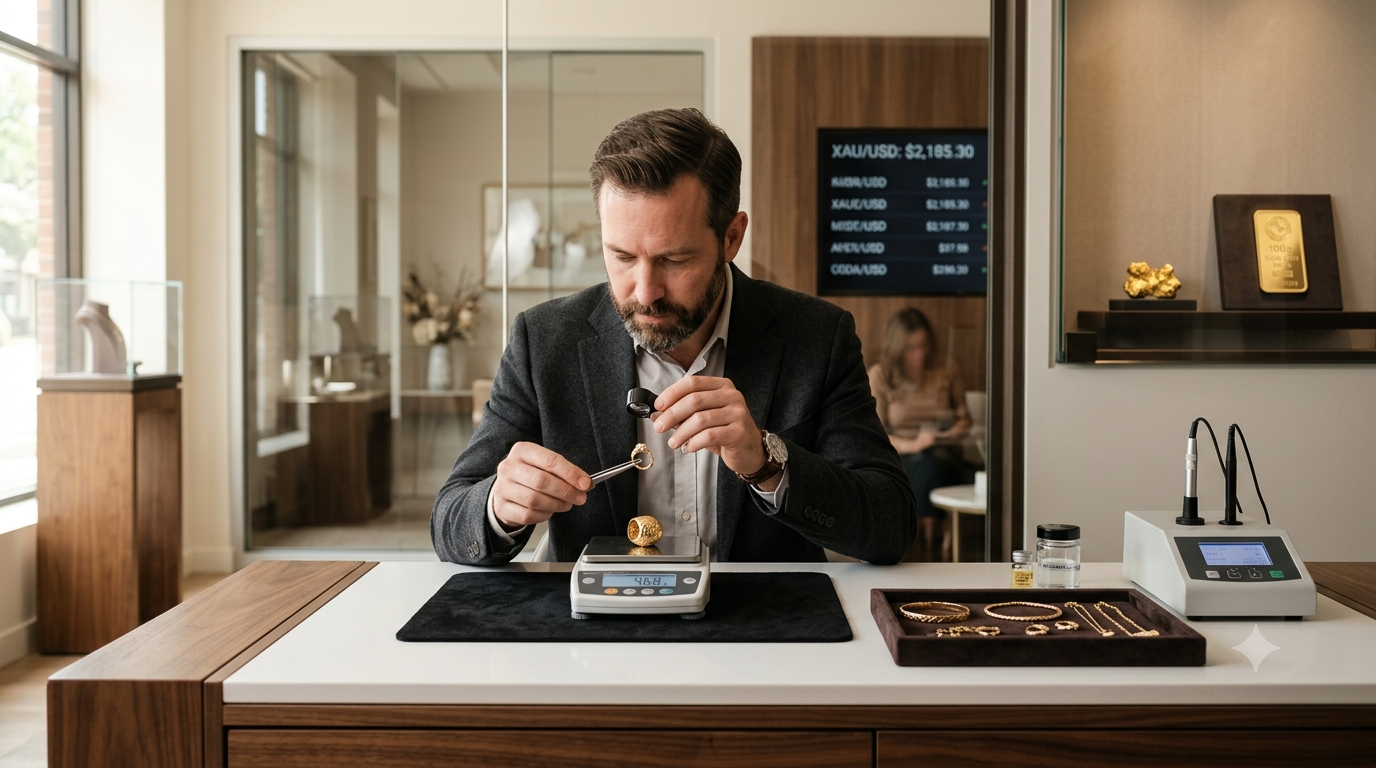
You checked today's gold price before selling your ring, but the offer from the buyer is much lower. Why?
You are not necessarily being ripped off. The gold price you see online is usually the spot price for gold, while your jewellery is a finished product that may contain other metals, stones, and materials. The buyer also has costs for testing, processing, refining, and running the business.
This is why gold buyers usually pay less than the headline gold price.
The important question is not simply, "Why is the offer lower?" It is "Can the buyer clearly explain the difference?"
In this guide, you will learn how gold buyers calculate offers, what deductions may be reasonable, how to spot a low offer, and how to compare buyers before you sell.
What Is the Difference Between Spot Price and Your Gold's Value?
The gold price shown online is normally a market price for refined gold. Your jewellery is different.
A gold ring, chain, bracelet, or earring may contain:
Pure gold mixed with other metals
Stones or gemstones
Solder
Clasps and springs
Enamel or other materials
The first step is to work out how much fine gold your item actually contains.
A simple starting formula is:
Weight × Purity × Gold Price = Estimated Melt Value
This gives you an estimate. It does not mean a buyer must pay you the full amount.
The buyer still has to test the item, process the material, and eventually sell the recovered gold.
Step 1: Gold Purity and Weight Determine the Starting Value
Karat Tells You How Much Gold Is in the Item
Gold jewellery is normally mixed with other metals because pure gold is soft.
The karat number tells you the approximate amount of pure gold:
Gold Purity
Approx. Pure Gold
24K
99.9%
22K
91.6%
18K
75%
14K
58.5%
9K
37.5%
For example, a 10-gram 18K ring contains approximately:
10g × 75% = 7.5g of fine gold
That does not mean the buyer will pay for every gram of the ring.
If the ring contains a gemstone, stone setting, or other non-gold material, some of that weight may not be included in the gold calculation.
This is one reason your home weight can be different from the buyer's payable weight.
How Do Gold Buyers Test Purity?
Professional buyers can use several methods to check gold.
Common methods include:
Acid testing
Electronic testing
X-ray fluorescence (XRF)
More detailed assay testing for certain materials or larger lots
XRF can provide a quick way to analyse the metal, but it also has limitations. GIA research notes that XRF accuracy can depend on factors such as the item's shape, surface, composition, and proper calibration.
This matters because a hallmark or stamp is not always enough to determine the full composition of a piece.
A reputable buyer should be able to explain:
What purity was found
What testing method was used
What weight is being valued
How the final offer was calculated
Step 2: Why Gold Buyers Pay Less Than Melt Value
Once the buyer knows the weight and purity, they can estimate the item's melt value.
But the buyer is not buying finished investment-grade gold. They are buying jewellery that may need further processing.
The difference between the estimated melt value and your final payout can include several factors.
Refining and Processing Costs
Gold may need to be:
Sorted
Tested
Melted
Refined
Assayed
Transported
Prepared for resale
The actual cost depends on the type and quantity of material being processed.
A small mixed collection of jewellery can have a different cost structure from a large commercial gold lot.
Business Costs
A gold buyer also has normal operating costs.
These can include:
Staff
Rent
Insurance
Security
Equipment
Compliance
Payment processing
Storage and transport
These costs are part of operating a legitimate business.
The Buyer's Profit Margin
A buyer also needs to make a profit.
For example, if a buyer pays you an amount today, the buyer may later send the gold to a refinery or sell it into the wholesale market. There is also a risk that the gold price changes before the transaction is completed.
This is why a buyer normally cannot pay the full theoretical melt value and still operate profitably.
The key point: A lower offer is not automatically unfair. An unexplained offer is the bigger warning sign.
Not Every "Fee" Is a Separate Deduction
One important point is often missed when comparing gold buyers.
A buyer may not show a separate "refining fee" or "processing fee."
Instead, the buyer may simply offer a lower price per gram.
For example:
Buyer A: Higher advertised price + additional charges
Buyer B: Lower advertised price + costs already included
Buyer B could leave you with more money even though the headline price looks lower.
That is why you should always compare the final amount you will receive, not just the advertised rate.
How to Tell a Fair Offer From a Lowball Offer
You do not need to be a gold expert to check an offer.
Follow these steps.
1. Check the Current Gold Price
Look at a reliable source for the current gold market price.
Remember that the price you see is generally a reference for refined gold, not a guaranteed payout for jewellery.
2. Confirm the Purity
Find out whether your item is 9K, 14K, 18K, 22K, or another purity.
Do not assume the stamp is the only evidence. Ask how the buyer tested the item.
3. Confirm the Payable Weight
Ask the buyer to explain:
Total weight
Weight of stones or other materials
Gold-bearing weight
Purity
Fine gold weight
This makes the calculation much easier to understand.
4. Ask for the Final Payout
Do not focus only on the price per gram.
Ask:
"How much will I actually receive after all deductions?"
That is the number you should compare between buyers.
5. Get More Than One Quote
Getting three written quotes can give you a much better idea of the local market.
Ask each buyer the same questions. This creates a fair comparison.
Warning Signs to Watch For
Be careful if a buyer:
Pressures you to sell immediately
Refuses to show the scale
Will not explain the purity result
Changes the offer without a clear reason
Adds unexpected charges at the end
Refuses to provide a written quote
Does not provide a receipt
Cannot explain how the final price was calculated
A good buyer should be comfortable explaining the valuation.
You should never feel pressured to accept an offer simply because your item has already been tested.
A Simple Gold Valuation Example
Imagine you have a 12-gram ring.
The ring contains:
2 grams of stone and other non-gold material
10 grams of 18K gold-bearing metal
The fine gold calculation is:
10g × 75% = 7.5g of fine gold
If the current reference gold price is $X per gram, the estimated melt value is:
7.5 × $X = $Y
The buyer's final offer may be lower than $Y because of processing costs, business costs, risk, and margin.
These figures are only an example. The actual gold price should be checked on the day you sell.
There is another important point.
If the ring is designer, antique, collectible, or contains valuable gemstones, it may be worth more as a complete item than as scrap gold.
In that situation, a specialist jeweller or appraiser may be a better option than a buyer who values the piece only for its metal content.
Should You Sell Jewellery as Scrap Gold?
Not always.
The right buyer depends on what you own.
Item
Buyer to Consider
Why
Broken gold chain
Scrap gold buyer
Mainly metal value
Damaged ring
Gold buyer or jeweller
Gold value may be the main factor
Designer jewellery
Specialist or jeweller
Brand may add value
Antique jewellery
Specialist or auction house
Age and craftsmanship may matter
Gemstone jewellery
Jeweller or specialist
Stones may have separate value
Gold coins
Gold or bullion specialist
Purity and market value may differ
A scrap buyer is often suitable for unwanted or broken jewellery.
But do not automatically sell a valuable piece for scrap without checking whether it has additional resale value.
NSW Sellers Should Check the Buyer's Licence
If you are selling gold in Sydney or elsewhere in NSW, local regulations are also worth understanding.
NSW Government guidance says a second-hand dealer licence is required for businesses dealing in prescribed second-hand goods, including jewellery containing gemstones or precious metals and precious metals themselves. There are some exemptions, so the exact situation depends on the business and transaction.
NSW second-hand dealers also have obligations around customer identification and record keeping. NSW Government guidance says licensees must display required signs, keep electronic records, and check customer identity.
If you are unsure about a buyer, check their licensing status and ask questions before completing a high-value transaction.
How to Get a Better Gold Offer
You can take a few simple steps before selling.
Keep Your Documents
If you have them, bring:
Original receipts
Certificates
Previous appraisals
Brand documents
Original boxes
Hallmark information
These documents may be especially useful for branded, collectible, or investment pieces.
Separate Different Gold Purities
If you have several items, keep different karats separate where possible.
For example, do not treat a collection of 9K, 18K, and 22K jewellery as one identical group.
Different purity levels contain different amounts of fine gold.
Ask the Same Questions Everywhere
When comparing buyers, ask:
What purity did you find?
What weight are you paying for?
What is the price per gram?
Are there any deductions?
Is the quoted amount the final payout?
Can I receive the quote in writing?
What happens if I decide not to sell?
These questions make it much harder for hidden costs to surprise you.
If you are comparing local options, you can also sell gold in Homebush and have your jewellery assessed in person.
Frequently Asked Questions About Gold Buyers and Gold Prices
Why do gold buyers pay less than the gold price?
Gold buyers usually pay less than the published gold spot price because spot price is a market reference for refined gold. Jewellery may contain other metals, stones, solder, and other materials. The buyer may also have costs for testing, refining, processing, insurance, security, and business operations. The buyer also needs a profit margin.
What is the difference between gold spot price and melt value?
The spot price is the market price used as a reference for gold. Melt value is an estimate of how much the actual fine gold in your item may be worth at that price.
For example, if a 10-gram item is 18K, it contains about 7.5 grams of fine gold. The estimated melt value would be based on those 7.5 grams, not the full 10-gram weight.
Do gold buyers pay the full spot price for jewellery?
Usually, no. The spot price does not represent a guaranteed buy-back price for jewellery. A buyer has to consider the item's purity, payable weight, processing costs, business expenses, market risk, and profit margin.
How do gold buyers calculate the value of jewellery?
Gold buyers generally start with the item's payable weight and purity.
A simple estimate is:
Payable weight × purity × current gold price = estimated melt value
The buyer may then account for costs and margin when making the final offer.
Does 18K gold have less value than 24K gold?
Yes, when comparing the same weight of gold. 18K gold is about 75% pure, while 24K gold is about 99.9% pure.
This means 10 grams of 18K gold contains about 7.5 grams of fine gold.
Why does my jewellery weigh more on my scale than at the gold buyer?
Your jewellery may include stones, settings, clasps, springs, enamel, solder, or other non-gold materials. A buyer may also use a more accurate professional scale.
The buyer normally needs to identify the payable gold weight before calculating the offer.
Do gemstones reduce the value of a gold ring?
They can reduce the amount of weight counted as gold, but that does not mean the gemstone has no value.
A valuable diamond or other gemstone may have separate resale value. Designer, antique, or unusual jewellery can also be worth more as a complete item than its scrap gold value.
How do gold buyers test purity?
Common methods include acid testing, electronic testing, and X-ray fluorescence (XRF). The method used can depend on the type of item and the buyer's equipment.
If you are unsure about the result, ask what test was performed and what purity was found.
Is an XRF gold test always accurate?
XRF is a useful testing method, but it has limitations. Results can be affected by the item's surface, shape, composition, and other factors.
For some items, additional testing may be appropriate. A reputable buyer should explain the testing method and result.
What fees can gold buyers deduct?
Depending on the buyer and transaction, costs may relate to testing, refining, processing, shipping, payment, or other business expenses.
Not every buyer lists these as separate fees. Some may include their costs in the price they offer per gram.
Always ask whether the quoted amount is your final payout.
Is a lower gold offer automatically a bad offer?
No. Different buyers have different costs, business models, and profit margins.
A lower offer can still be reasonable if the buyer clearly explains the calculation.
The main warning sign is an offer that cannot be explained or includes unexpected charges.
How can I compare two gold buyer offers?
Do not compare only the advertised price per gram.
Ask both buyers for:
Gross weight
Payable weight
Purity
Fine gold weight
Price per gram
All deductions
Final payout
Then compare the amount you will actually receive.
Should I get multiple quotes before selling gold?
Yes. Getting several written quotes can help you understand the market and identify an unusually low offer.
Three quotes are a useful starting point, but you can get more if your jewellery is particularly valuable or unusual.
What should I ask a gold buyer before accepting an offer?
Ask:
What purity did you find?
What is the total weight?
What is the payable gold weight?
What price per gram are you using?
Are there any deductions?
Is this the final amount I will receive?
Can I decline the offer after testing?
Will I receive a receipt?
A buyer who gives clear answers makes it easier for you to make an informed decision.
Can I negotiate a gold buyer's offer?
You can ask whether the buyer can improve the offer, especially if you have competing written quotes.
However, the buyer may have limits based on refining costs, market conditions, and their business model.
The best approach is to compare the final payouts rather than relying only on negotiation.
Should I sell gold jewellery for scrap or as jewellery?
It depends on the item.
Broken or common jewellery may be suitable for a scrap gold buyer. Designer jewellery, antiques, gemstone pieces, rare items, and collectible jewellery may have value beyond the gold itself.
Consider getting a specialist valuation before selling a valuable piece for scrap.
Can old or damaged gold jewellery still be valuable?
Yes. Damage does not necessarily remove the value of the gold.
In some cases, the piece may also have value because of its brand, age, design, gemstones, or rarity.
A specialist can help determine whether the item should be sold for its metal content or as a complete piece.
What are the biggest warning signs when selling gold?
Be cautious if a buyer:
Pressures you to sell immediately
Refuses to show the weight
Will not explain the purity result
Changes the price without a clear reason
Adds unexpected charges
Refuses to provide a written quote
Does not give a receipt
Cannot explain how the final payout was calculated
You should feel comfortable asking questions before you sell.
How can I avoid losing money when selling gold jewellery?
Start by checking the current gold price and understanding your jewellery's purity and payable weight.
Get multiple written quotes and compare the final payouts.
Also check whether your jewellery has value beyond its gold content.
Most importantly, do not accept an offer you do not understand.
Is the highest price per gram always the best offer?
No.
A buyer may advertise a high price per gram but add testing, processing, shipping, or other costs later.
Another buyer may advertise a lower rate but include those costs.
Always compare the final cash amount rather than the headline rate.
Is it safe to sell gold to an online buyer?
Online gold buyers can be convenient, but check the company's reputation, terms, insurance arrangements, payment process, return policy, and any fees before sending valuable jewellery.
For high-value items, understand what happens if you reject the buyer's offer and whether your jewellery will be returned.
What is the best way to get a fair gold price?
There is no single price that applies to every piece of gold jewellery.
The best approach is to understand the current market price, confirm your item's purity and payable weight, request an itemised quote, and compare several reputable buyers.
A fair transaction should be clear, transparent, and easy to understand.
What Should You Do Before Selling Gold?
The basic pricing chain is easier to understand than it first appears:
Weight → Purity → Fine Gold Content → Market Price → Buyer Costs and Margin → Final Payout
The market gold price is only the starting point.
Before accepting an offer, remember to:
Check the current gold price
Confirm the purity
Confirm the payable weight
Ask how the gold was tested
Request an itemised quote
Ask about every deduction
Compare the final payout with other buyers
Check whether your jewellery has value beyond its gold content
Walk away if the buyer cannot explain the offer
If you want more practical advice before selling, read How to Sell Gold Jewellery Without Losing Money.
Final Takeaway
Gold buyers in australia do not normally pay the full spot price for jewellery because spot price and a seller's final payout are not the same thing.
The buyer has to consider purity, payable weight, testing, refining, operating costs, market risk, and profit.
That does not mean every low offer is fair.
The best way to protect yourself is to understand the calculation and compare the final payout.
A trustworthy buyer should be able to explain what your gold is worth, how it was tested, what weight is being used, and why the final offer is lower than the market reference price.
If the numbers are clear and competitive, you can make your decision with confidence. If the buyer cannot explain them, get another quote before you sell.
Written By
Team Times&Gold
Journal Insights
Visit Us in Parramatta!
NO APPOINTMENTS NEEDED!
Located inside DLUX Jewellers
Opposite Commonwealth Bank