Australia's Highest Paying Gold Buyers $$$


How to Compare Gold Buyer Quotes Before Selling
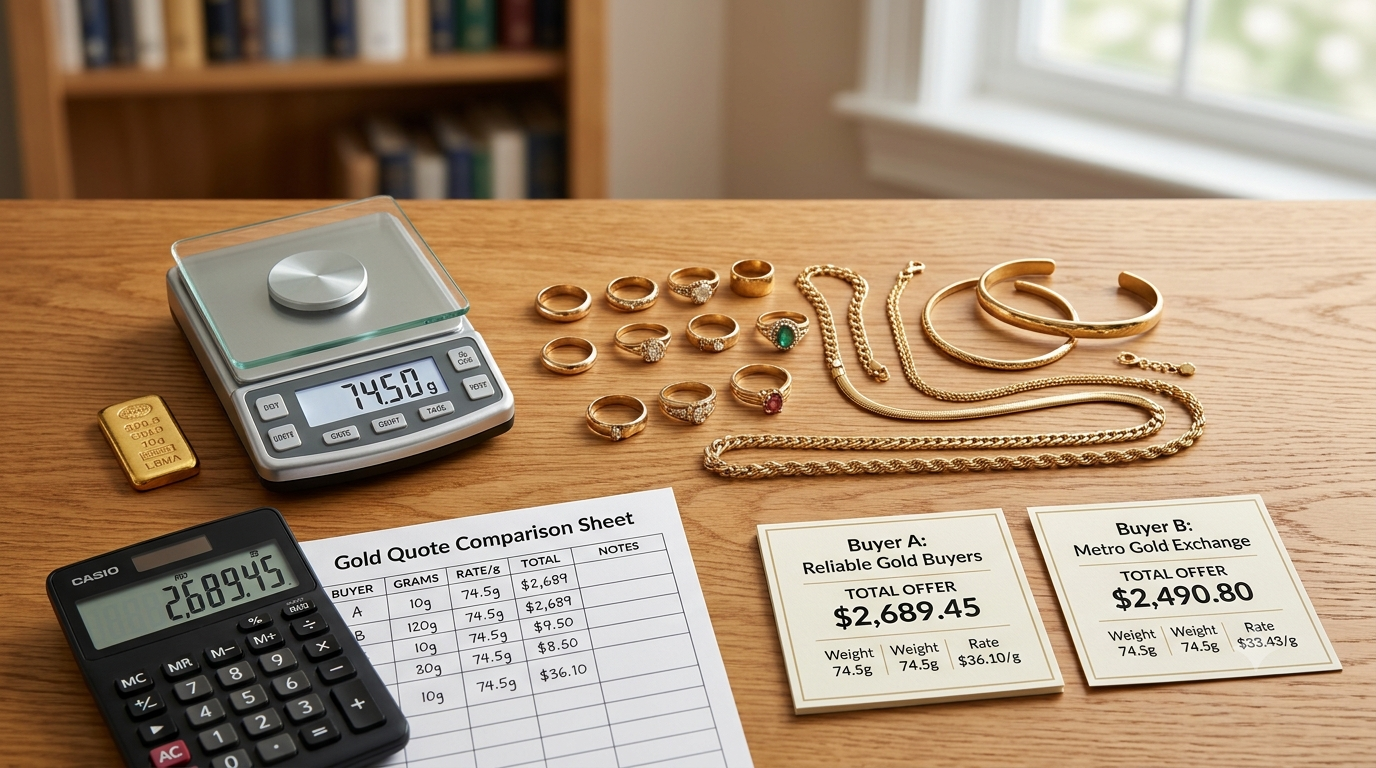
Selling your gold can be a good way to get extra cash, but choosing the right Gold Buyer is not always easy. Imagine two buyers offering different prices for the same gold. One offers $500 but charges a $40 fee. The other offers $475 with no extra fees. At first, the first offer looks better, but the second buyer actually pays more.
This is why you should never choose a buyer based only on the highest price they offer. You need to compare the final amount you will receive.
The value of your gold depends on its purity, weight, current gold price, and the buyer’s costs. With a few simple steps, you can compare offers and make a better choice.
Learn What Your Gold Is Worth Before You Get Quotes
Before contacting buyers, take some time to understand what your gold may be worth. This will help you spot low offers and ask better questions.
Check Karat Marks and Estimate Gold Content
Gold purity is often shown in karats (K). The higher the karat, the more gold the item contains.
Here are some common gold purity levels:
10K gold: About 41.7% pure gold
14K gold: About 58.3% pure gold
18K gold: About 75% pure gold
24K gold: About 99.9% pure gold
Look for small marks inside rings, on bracelets, or near clasps. These marks can help you understand the gold content.
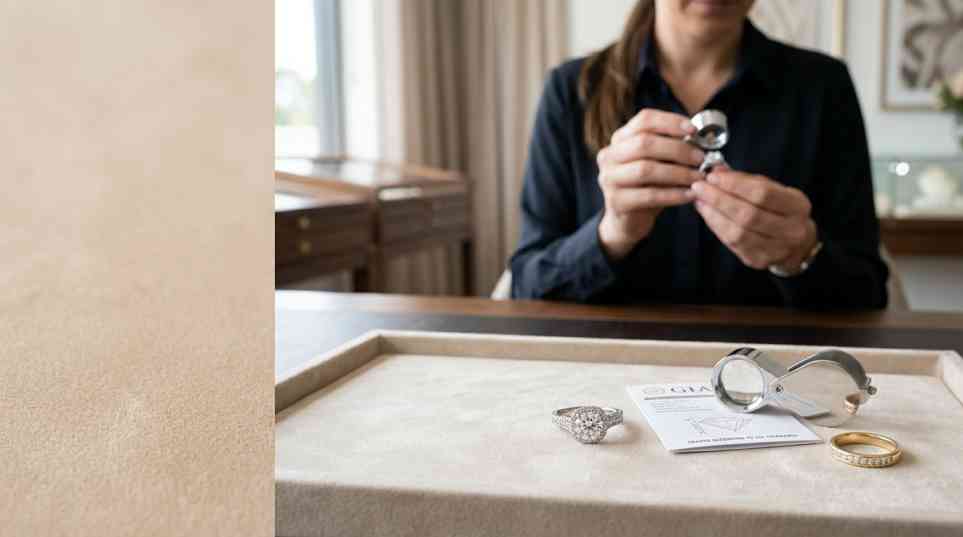
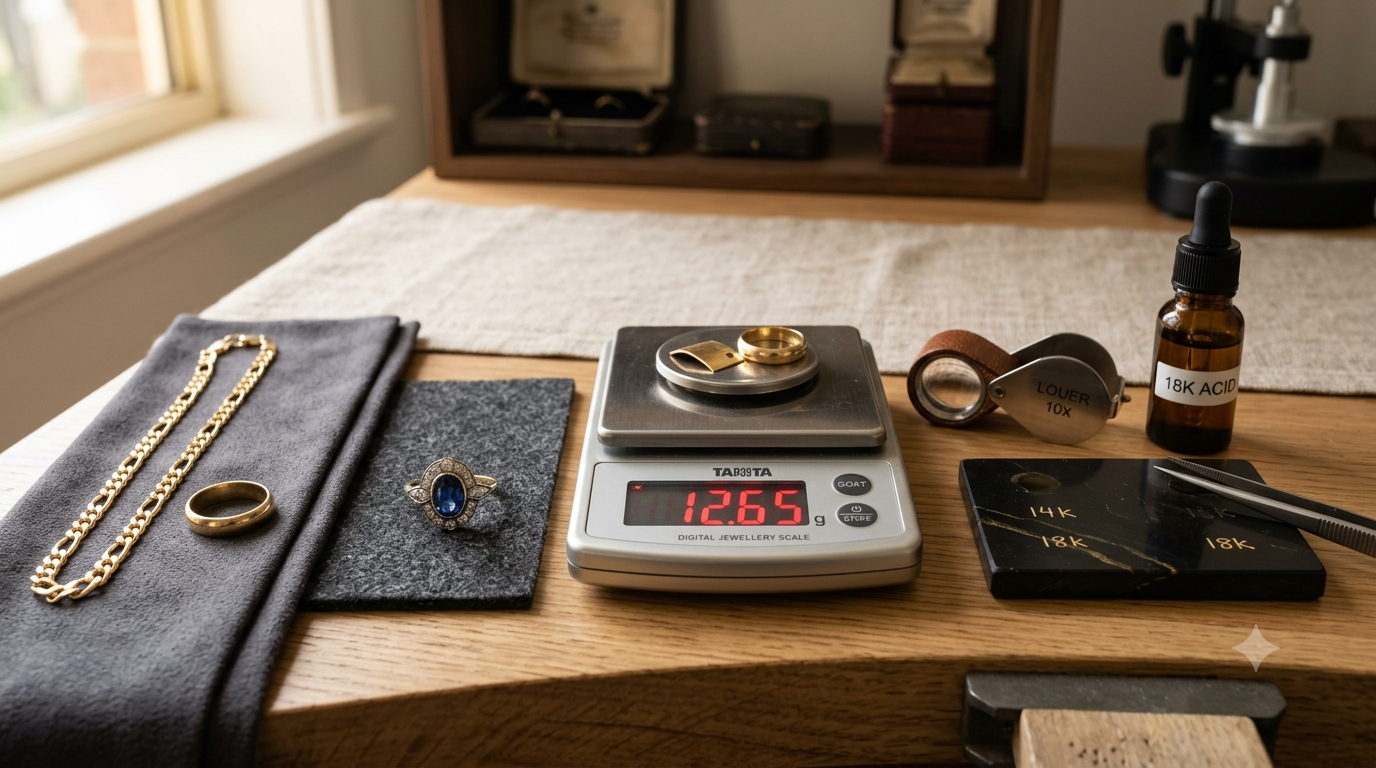
However, stamps are only a starting point. A Gold Buyer may test your items to confirm their purity. Also, remember that stones, plastic parts, and some other materials may not count toward the gold weight.
Weigh Your Items and Check the Gold Price
Use a digital scale to weigh each item separately. Record its weight and karat in a notebook or spreadsheet.
Gold is often weighed in grams, so using grams makes it easier to compare quotes.
Next, check the current gold spot price. This is the market price used as a common reference for gold. Buyers usually offer less than the full spot value because they may have business, processing, and resale costs.
For example, on October 28, 2026, check a trusted live gold-price source, such as Kitco, and record the price per gram and time checked. Gold prices change often, so do not use an old price as if it were current.
Set a Realistic Value Range
You can make a simple estimate before asking for quotes.
Estimated value = Pure gold weight × Current gold price per gram × Expected payout rate
For example, if your item contains 5 grams of pure gold, the reference price is $100 per gram, and the expected payout rate is 85%, your estimated payout is:
5 × $100 × 85% = $425
These figures are only an example. This calculation is a comparison tool, not a guaranteed offer.
For extra confidence, ask an independent appraiser how purity, testing, and item type may affect the value. Some antique or branded jewelry may be worth more than its gold content alone.
Compare Each Gold Buyer Quote on the Same Terms
Once you know what you have, start collecting offers. The goal is to compare each buyer fairly.
Ask for the Key Details in Writing
Ask every Gold Buyer to share the following details:
Tested gold karat
Gold weight in grams
Price per gram
Payout rate, if used
All fees and deductions
Final amount you will receive
Payment method and timing
Offer expiry time
Return policy if you reject the offer
Also, ask whether the buyer values your jewelry as scrap gold or may pay more for its brand, age, design, or collectible value.
Written quotes help you avoid confusion and make it easier to compare offers later.
Calculate the Cash You Will Actually Receive
A high offer can become less attractive after fees.
For example:
Detail
Buyer A
Buyer B
Gross offer
$500
$475
Extra fees
$40
$0
Final payout
$460
$475
Buyer B pays $15 more, even though Buyer A gives the higher starting offer.
Ask if there are any testing, refining, shipping, insurance, or other charges. Also, find out if the buyer can change the offer after testing and what happens if you do not accept the revised amount.
Compare Like With Like
Try to get at least three quotes before selling.
Give each buyer the same item list and compare offers within a similar market-price time frame. This makes your comparison more useful.
Keep a simple record of each buyer's gross offer, fees, final payout, and payment terms.
If your items include gemstones, branded jewelry, or antique pieces, ask for separate valuations where possible. This can help you understand whether you are getting paid for the full value of your items.
Check the Buyer Before You Hand Over Your Gold
A good price matters, but a trustworthy buyer matters just as much.
Look for Clear Business Details and Customer Terms
Before choosing a Gold Buyer, check:
Business name, address, and contact details
Written buying and return policies
Independent customer reviews
Complaints or warning notices
Clear details about testing and payment
In the United States, you can check with your state or local consumer protection office. You can also search the Better Business Bureau for business profiles and complaints.
Rules for secondhand precious-metal buyers vary by state and city. Some places have licensing, identification, reporting, or holding requirements. Check the rules that apply to your area.
Protect Your Gold During Testing and Shipping
Take clear photos of every item before visiting a buyer or sending anything by mail. Make a list with descriptions, weights, and visible marks.
For mail-in services, ask about tracking, insurance coverage, return shipping costs, and what happens if you reject the offer.
Read the terms carefully before shipping. Confirm how your items will be handled and returned. Do not send valuable gold until you understand the full process.
Watch Out for Pressure and Vague Offers
Be careful if a buyer:
Pushes you to sell immediately
Refuses to explain fees
Will not show the weight
Gives unclear testing results
Changes the offer without a clear reason
You should feel free to ask questions and take your time. If something does not feel right, you can leave and get another quote.
You can also ask a qualified appraiser or consumer protection official what local sellers should check before accepting an offer.
Use a Simple Process to Choose the Best Offer
A clear process can save time and help you avoid mistakes.
Gather Quotes in a Consistent Order
Follow these simple steps:
Sort your gold by karat and item type.
Record the weight and visible marks.
Check the current gold price.
Contact at least three buyers.
Ask every buyer the same questions.
Write down the final payout and terms.
Compare the offers before making a decision.
This method keeps your information organized and helps you make a fair comparison.
Review a Real-World Comparison
Imagine a seller wants to sell one 14K gold bracelet.
The seller receives three illustrative offers:
Buyer
Gross Offer
Fees
Final Payout
Buyer A
$600
$50
$550
Buyer B
$575
$0
$575
Buyer C
$590
$25
$565
In this example, Buyer B gives the highest final payout.
However, the seller should also check the testing method, payment timing, and return terms before choosing. These figures are for illustration only, not verified market quotes.
A real comparison should use current offers for the same bracelet, with clear testing and pricing details.
Make Your Decision With a Short Checklist
Before accepting an offer, ask yourself:
Is this the best final payout?
Are all fees clearly listed?
Do I understand the purity test and weight?
Are payment timing and method clear?
Can I reject the offer and get my gold back?
Do I trust the buyer and understand the terms?
Keep your quote records and any receipts. If the terms change without a clear reason, pause and ask questions.
Choose the Quote That Holds Up After the Details
Choosing the right Gold Buyer is about more than finding the biggest number. You need to know how your gold is valued, what fees apply, and how much money you will actually receive.
Get several written quotes, compare the same details, and check the buyer's reputation before handing over your items. Take your time, ask questions, and keep control of your gold.
Your next step: Prepare a list of your gold items, note their weight and karat, and request at least three written quotes. A little research today can help you make a smarter selling decision.
Frequently Asked Questions (FAQs)
1. How do I compare Gold Buyer quotes?
Compare at least three quotes from different buyers. Check the gold weight, purity, price per gram, fees, and final payout. Choose the offer that gives you the best value and clear terms.
2. How do I know how much my gold is worth?
Your gold's value depends on its purity, weight, and current gold price. You can estimate its value by calculating the pure gold content and comparing it with the current market price.
3. Does a Gold Buyer pay the full gold market price?
No, most gold buyers pay less than the full market price. They may deduct costs for testing, refining, handling, and resale. The exact payout depends on the buyer and your gold items.
4. Why do Gold Buyer quotes differ?
Quotes can differ because buyers may use different purity tests, gold prices, payout rates, and fees. Some buyers may also value branded, antique, or collectible jewelry differently.
5. Should I get more than one gold-buying quote?
Yes. Getting at least three quotes can help you understand the value of your gold and find a better offer. Make sure every buyer checks the same items under similar pricing conditions.
Written By
Team Times&Gold

Visit Us in Parramatta!
NO APPOINTMENTS NEEDED!
Located inside DLUX Jewellers
Opposite Commonwealth Bank