Australia's Highest Paying Gold Buyers $$$


Is It Better to Sell Gold Jewellery by Weight or by Piece?
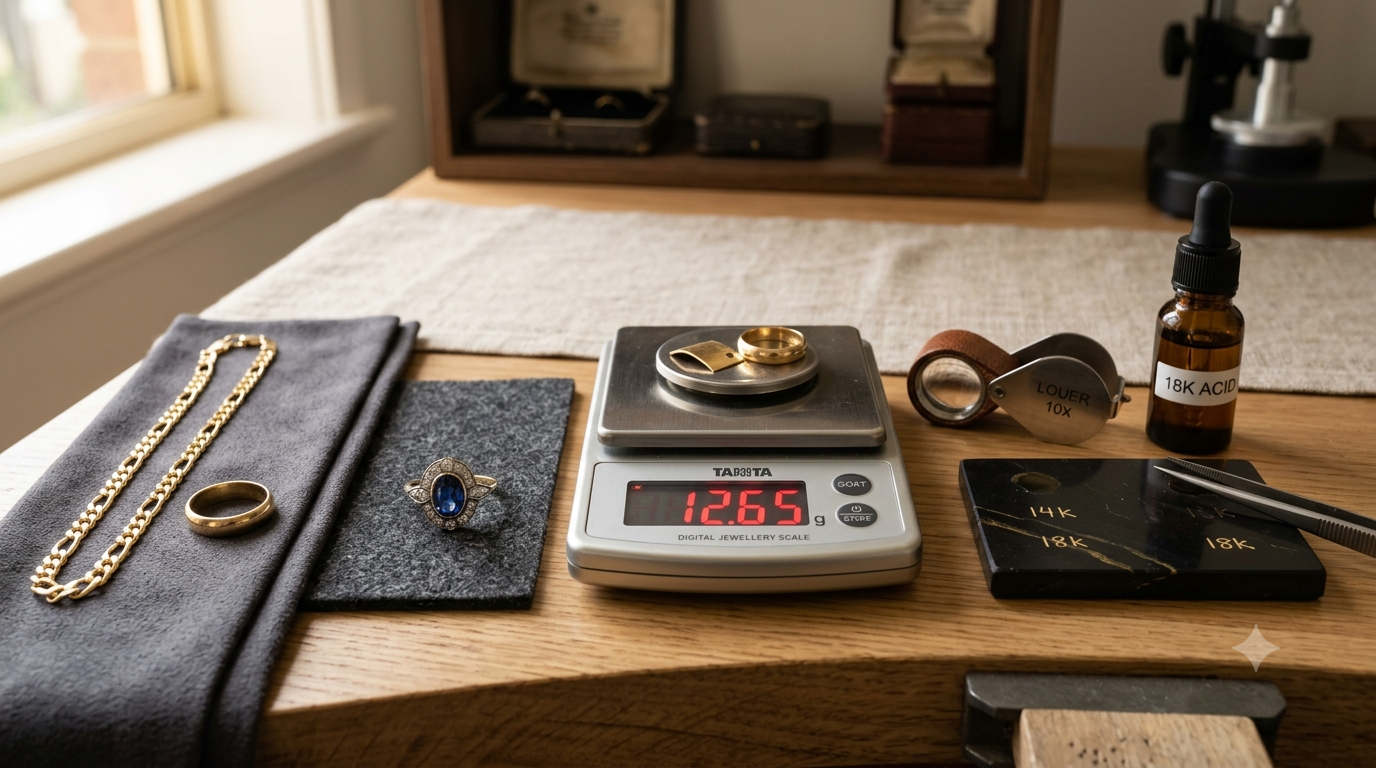
If you plan to sell gold jewellery, one important question is whether you should sell it by weight or as a complete piece. The answer can affect how much money you receive. A plain gold chain may be worth more for its gold content, while a signed designer ring may attract a higher price because of its brand, design, or gemstones.
The best option depends on the type of jewellery you own and what buyers are willing to pay for it. Factors such as gold purity, weight, condition, age, brand, and market demand all play a role.
Before accepting an offer, it is worth getting two valuations: one based on the gold's weight and another based on the jewellery's resale value. Comparing both can help you make a better decision.
What Determines Your Gold Jewellery's Value?
Before choosing how to sell your jewellery, you need to understand what makes it valuable. Gold purity, weight, and the current gold price are important, but they are not the only factors.
Check the Karat Mark and Calculate Pure Gold
Gold jewellery comes in different levels of purity. The karat mark tells you how much gold is present in the item.
Here are some common gold purity levels:
24K gold: About 99.9% gold.
18K gold: 75% gold.
14K gold: About 58.3% gold.
10K gold: About 41.7% gold.
For example, an 18K gold ring contains 75% gold, while the remaining 25% consists of other metals. These metals are added to make the jewellery stronger or change its colour.
A simple way to estimate the gold content is:
Gold weight × Gold purity = Estimated pure gold content
To estimate the metal's value, you can then multiply the pure gold content by the current gold price per gram. This gives an approximate melt value before any deductions.
However, the total weight of your jewellery may include gemstones, clasps, solder, and other parts that are not gold. These parts may need to be assessed separately or excluded from the gold weight.
A hallmark can help identify the gold's fineness, but it does not automatically prove that the jewellery has a high resale value.
Understand the Difference Between Melt Value and Resale Value
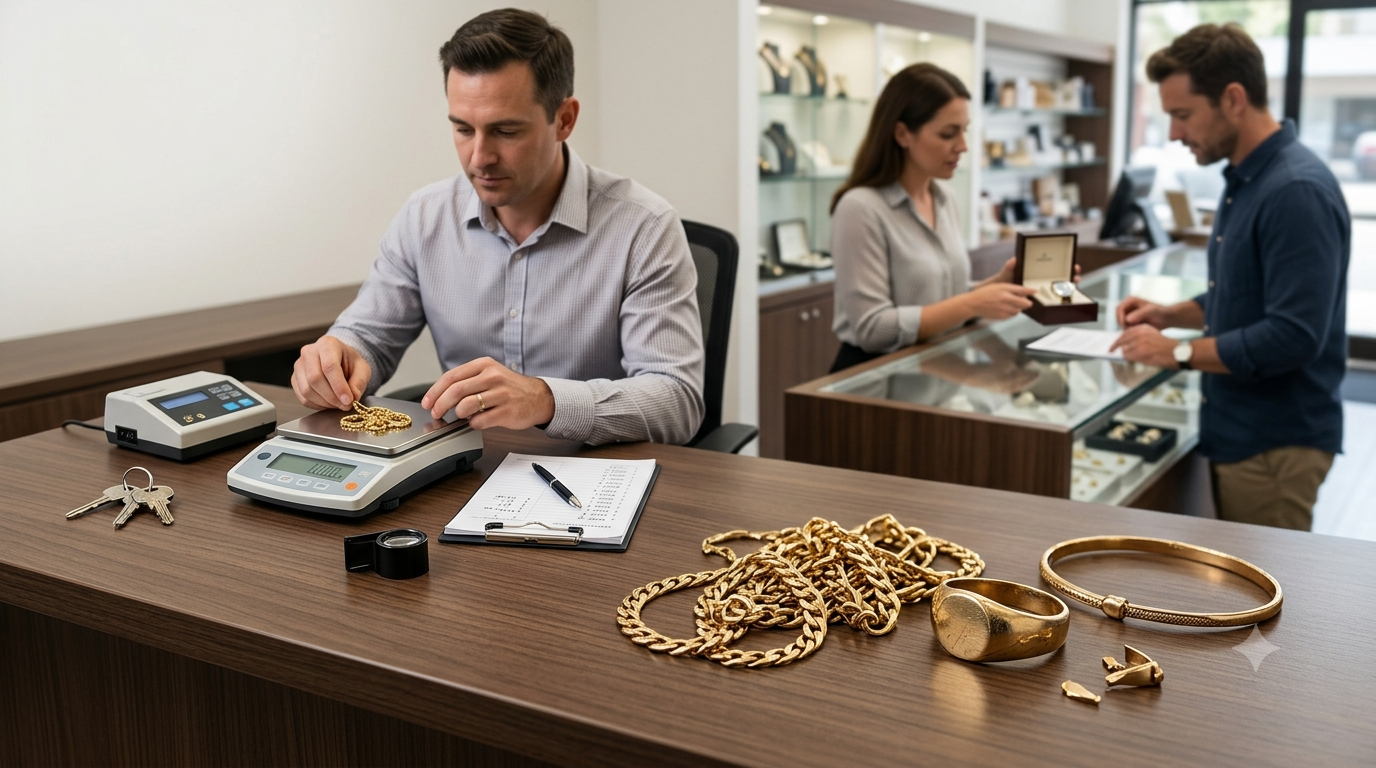
Melt value is the estimated value of the gold if it is refined and sold as metal. Buyers may use this value when assessing broken chains, damaged rings, and jewellery with little demand as a finished product.
However, the amount you receive may be lower than the estimated melt value. Buyers may need to cover testing, refining, handling, and other business costs. The offer also depends on the buyer's pricing policy and the market.
Resale value is different. It is the amount a buyer may be willing to pay for the complete piece of jewellery.
A branded ring, a rare vintage necklace, or a well-made bracelet may attract buyers who want to wear or collect it. In these cases, the design, maker, age, and condition can add value beyond the gold itself.
This is why you should not assume that every gold item is worth only its weight in gold.
When Selling Gold Jewellery by Weight Makes Sense
Selling by weight can be a practical choice when your jewellery has little value as a complete item.
Choose Weight-Based Selling for Common or Damaged Pieces
A weight-based sale may suit you if you have:
Broken gold chains or bracelets.
Single earrings without their matching pair.
Worn gold bands with little resale demand.
Unbranded jewellery with a simple design.
Damaged pieces that are unlikely to be sold again as jewellery.
In these cases, a buyer may focus mainly on the gold's purity and the amount of gold available.
For example, a broken chain may no longer be attractive to someone looking for ready-to-wear jewellery. A gold buyer may instead assess its gold content and make an offer based on the current market price.
Remember that the total item weight is not always the same as the gold weight. If your jewellery contains stones or non-gold parts, ask the buyer how these will be treated during the valuation.
Check the Maths Before Accepting an Offer
You do not need to be a gold expert to check whether an offer makes sense. Start by confirming the purity, understanding the gold weight, and checking the current gold price.
Consider this example.
Imagine you have a gold item weighing 10 grams. Testing confirms that it is 18K gold.
Because 18K gold contains 75% gold, the item contains approximately 7.5 grams of pure gold before any deductions for non-gold parts.
This is an illustrative calculation, not a cash quote. The final offer will depend on the current gold price, the buyer's costs, the testing results, and other relevant factors.
Before accepting an offer, ask the buyer to explain:
The item's tested gold purity.
The weight used to calculate the offer.
The price per gram being applied.
Any deductions or fees.
The final payout and payment method.
Request these details in writing where possible. A clear explanation makes it easier to understand the offer and compare it with other buyers.
Compare Offers on the Same Terms
Getting quotes from at least two or three buyers can help you understand the range of offers available.
However, do not compare offers based on the final amount alone. One buyer may calculate the price using the full item weight, while another may use only the estimated gold weight.
Check whether each quote includes the same purity, weight, fees, and treatment of gemstones. Also ask whether testing or refining costs will be deducted.
When all offers use the same information, you can compare them more fairly and decide which buyer offers the best value.
When Selling Gold Jewellery by Piece May Bring More
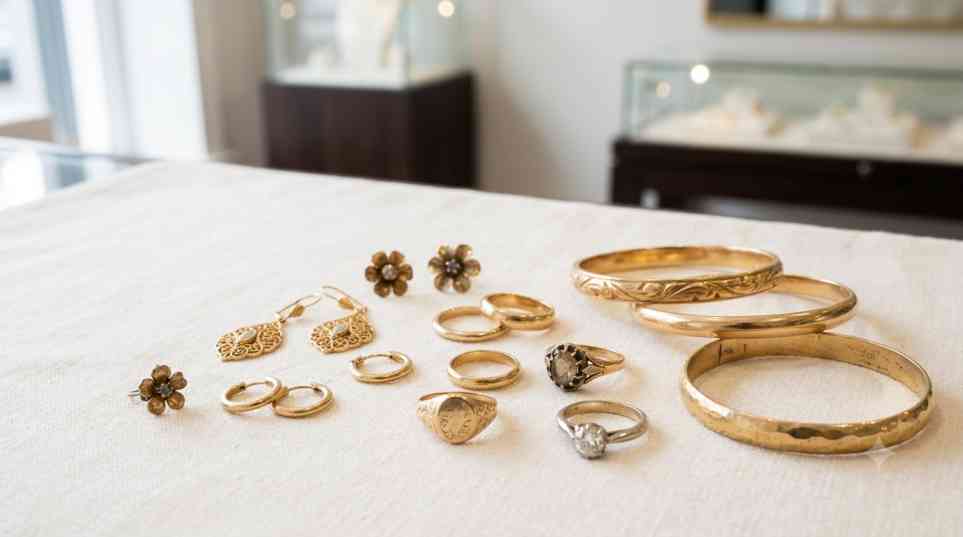
Some jewellery has value beyond the gold it contains. Selling it as a complete item may be the better option when there is demand for its design, maker, age, or gemstones.
Look for Signs of Collector or Buyer Demand
Certain features can make jewellery more attractive to buyers.
A recognised maker, a sought-after design, a rare vintage style, or excellent condition may increase its resale appeal. Signed jewellery and matching sets may also interest specialist dealers and collectors.
Gemstones can add value too, but their presence does not guarantee a higher offer. Their type, quality, size, condition, and demand all matter.
For example, a signed designer ring with an attractive design and a desirable gemstone may appeal to someone who wants to wear it. That buyer may be willing to pay more than the value of the gold alone.
On the other hand, an ordinary gold ring with heavy wear and no strong resale demand may be valued mainly for its metal content.
The important point is to assess the complete item before deciding to sell it as scrap gold.
Prepare Your Jewellery for an Appraisal
A little preparation can help you get a more accurate valuation.
First, gather any receipts, certificates, original packaging, and documents that identify the maker or gemstones. These records may help support the item's authenticity and history.
Next, check the jewellery's condition. You can clean it gently if appropriate, but avoid harsh chemicals or aggressive polishing. These may damage the item or remove signs of age that matter to collectors.
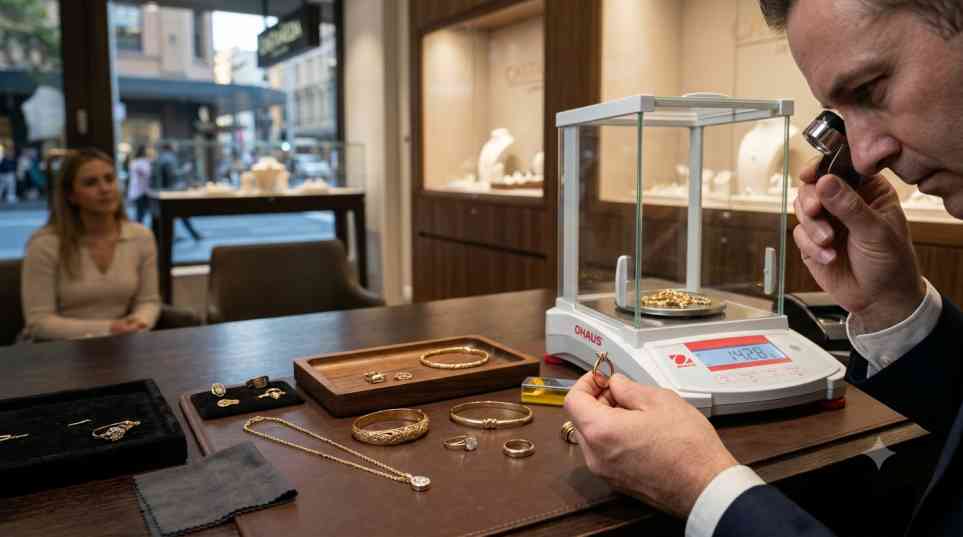
Finally, ask an appraiser or specialist dealer to assess the complete piece rather than looking only at its gold content.
A useful question to ask is: "What could this item sell for as jewellery, and how does that compare with its gold value?"
A qualified appraiser or specialist dealer can explain how factors such as brand, design, condition, and market demand affect the assessment. Do not rely on an expert quote unless it can be verified from a genuine source.
Compare Different Ways to Sell
You may have several options, depending on the jewellery you own.
A local jeweller may assess items suitable for resale. A specialist vintage dealer may be interested in older or unusual designs. A direct resale platform may connect you with people looking for a particular style or brand.
Each option has different costs, risks, and timelines. Selling directly to another person may take longer and require you to manage enquiries and payment safely.
For example, a signed designer ring in good condition may attract a higher offer as a complete item than its estimated melt value. A damaged, unbranded chain may be easier to sell based on its gold content.
These are illustrative examples. The actual result depends on the item and the offers available.
If you are also researching other jewellery-related services, you may come across businesses such as watch buyers in sydney. However, a watch valuation and a gold jewellery valuation follow different assessment methods, so make sure you choose a buyer with experience in the type of item you want to sell.
Choose the Sale Method That Fits Your Jewellery
The best way to sell depends on the item, its condition, and the demand for it. Use this simple checklist before making a decision.
Consider selling by weight if:
The jewellery is broken or badly damaged.
It is a common design with little resale demand.
It has no clear brand or collector appeal.
Its main value comes from its gold content.
Consider a piece-based appraisal if:
The item is signed or made by a recognised designer.
It has a rare or sought-after design.
It is vintage and may interest collectors.
It contains gemstones that may have resale value.
It is in good condition and can be worn again.
If you are unsure, get both types of valuation. This gives you a clearer picture of your options before you commit to a sale.
Avoid Common Pricing Mistakes
A few simple mistakes can lead to an unfair comparison or a missed opportunity.
First, do not assume that the full weight of your jewellery is gold. Stones, clasps, and other components may affect the amount of gold being valued.
Second, do not expect to receive the full spot gold price. The spot price is a market reference, not a guaranteed payout for your jewellery.
Third, do not sell a potentially rare or branded item for its scrap value without checking whether someone might want it as a complete piece.
Finally, avoid relying on a single buyer's test or offer. Comparing valuations can help you understand how different buyers assess your jewellery.
Before handing over your item, check the buyer's reviews, payment terms, fees, and any rules that apply if you change your mind.
Get Two Valuations Before You Sell
So, is it better to sell gold jewellery by weight or by piece? Neither option is always better. The right choice depends on the jewellery you own and what buyers are willing to pay for it.
Weight-based selling can make sense for broken, common, or unbranded items. Selling by piece may be more suitable for designer jewellery, rare vintage items, and pieces with desirable gemstones.
The safest approach is to compare a clear weight-based offer with a piece-based appraisal before deciding.
Take photographs of your jewellery, gather any receipts or certificates, and request written quotes. Confirm the purity, gold weight, deductions, and payment terms before accepting an offer.
For more guidance before making your decision, read Should I Sell My Gold Jewellery or Keep It? How to Make the Right Choice in 2026. Understanding your options can help you choose the sale method that best suits your jewellery and your needs.
Taking a little time to compare offers can help you make a more informed decision and avoid selling a valuable piece for less than it may be worth.
Written By
Team Times&Gold
Journal Insights
Visit Us in Parramatta!
NO APPOINTMENTS NEEDED!
Located inside DLUX Jewellers
Opposite Commonwealth Bank