Australia's Highest Paying Gold Buyers $$$


How Long Does It Take to Sell Gold Jewellery in Sydney?

If you want to sell gold jewellery in Sydney, a simple walk-in sale is often completed in around 15 to 60 minutes. But that's only true for plain, easy-to-value pieces. If your jewellery has gemstones, a designer name, antique value, or an unclear history, the full process can take a lot longer.
How long it takes also depends on where you sell. A local buyer may pay you the same day. An online buyer usually needs several days. An auction house can take weeks, because your piece has to wait for the right sale and then for settlement afterwards.
One thing is worth remembering before you start: the fastest offer isn't always the best one. A little preparation and a bit of comparison shopping can make a real difference to what you walk away with.
Typical Timeframes to Sell Gold Jewellery in Sydney
Every selling method has its own rhythm.
Walk-in gold buyers: Testing, weighing, and payment are often finished within 15–60 minutes for straightforward items.
Jewellery stores: Sometimes same-day, sometimes several business days if a specialist needs to check the piece first.
Online gold buyers: Typically around three days to two weeks once you include postage, testing, and payment processing.
Auction houses: Often two to eight weeks, depending on when the next suitable auction runs and how quickly settlement happens.
Private sales: No fixed timeline — could be a few days, could be a few weeks, since it depends entirely on finding a buyer.
These are typical ranges based on how each selling method generally works, not guarantees. If your jewellery is plain gold, a local buyer is usually your quickest route. Anything more unusual tends to need extra time, because its value may sit above the gold price alone.
What Happens During a Gold Jewellery Valuation
A walk-in valuation usually follows a similar pattern:
The buyer inspects your jewellery and looks for hallmarks.
They check the purity — commonly stamped as 9ct, 14ct, 18ct, 22ct, or 24ct.
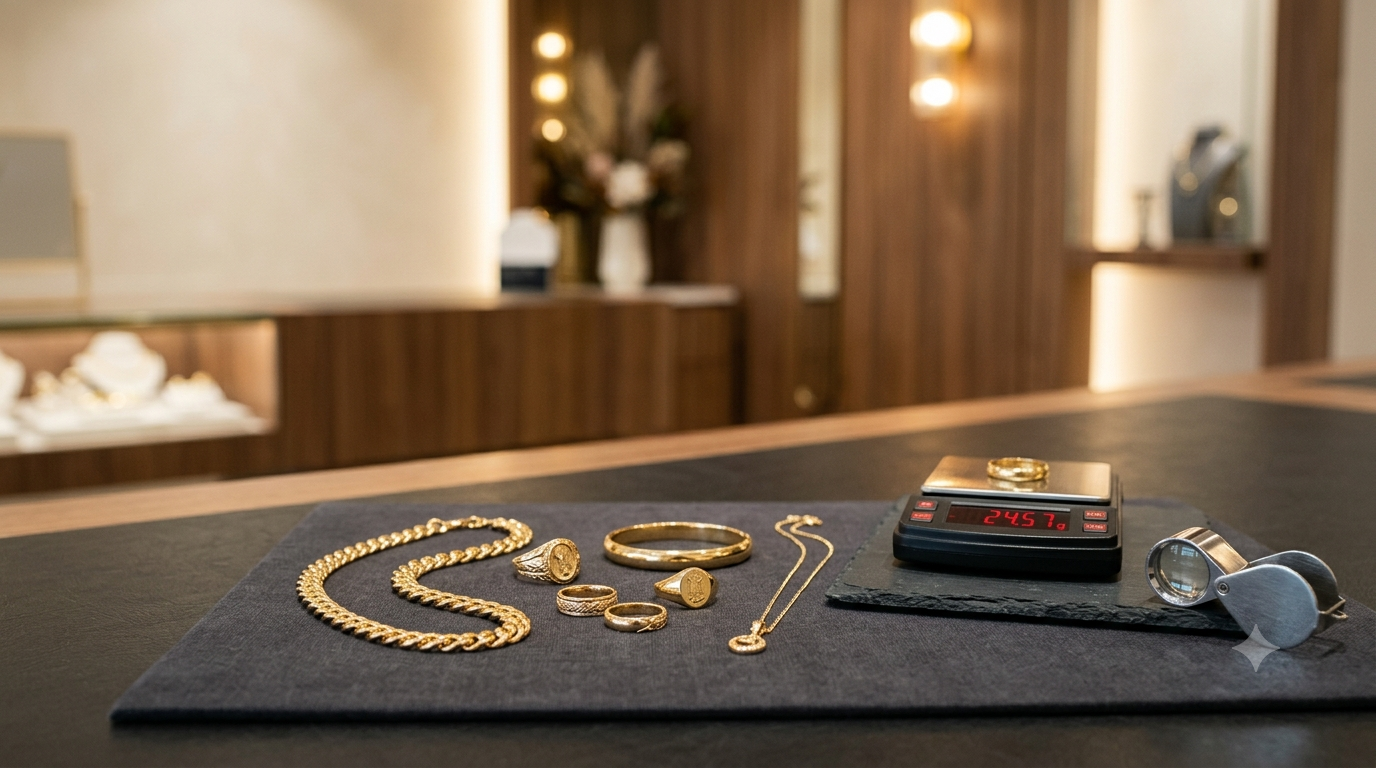
Each piece is weighed in grams.
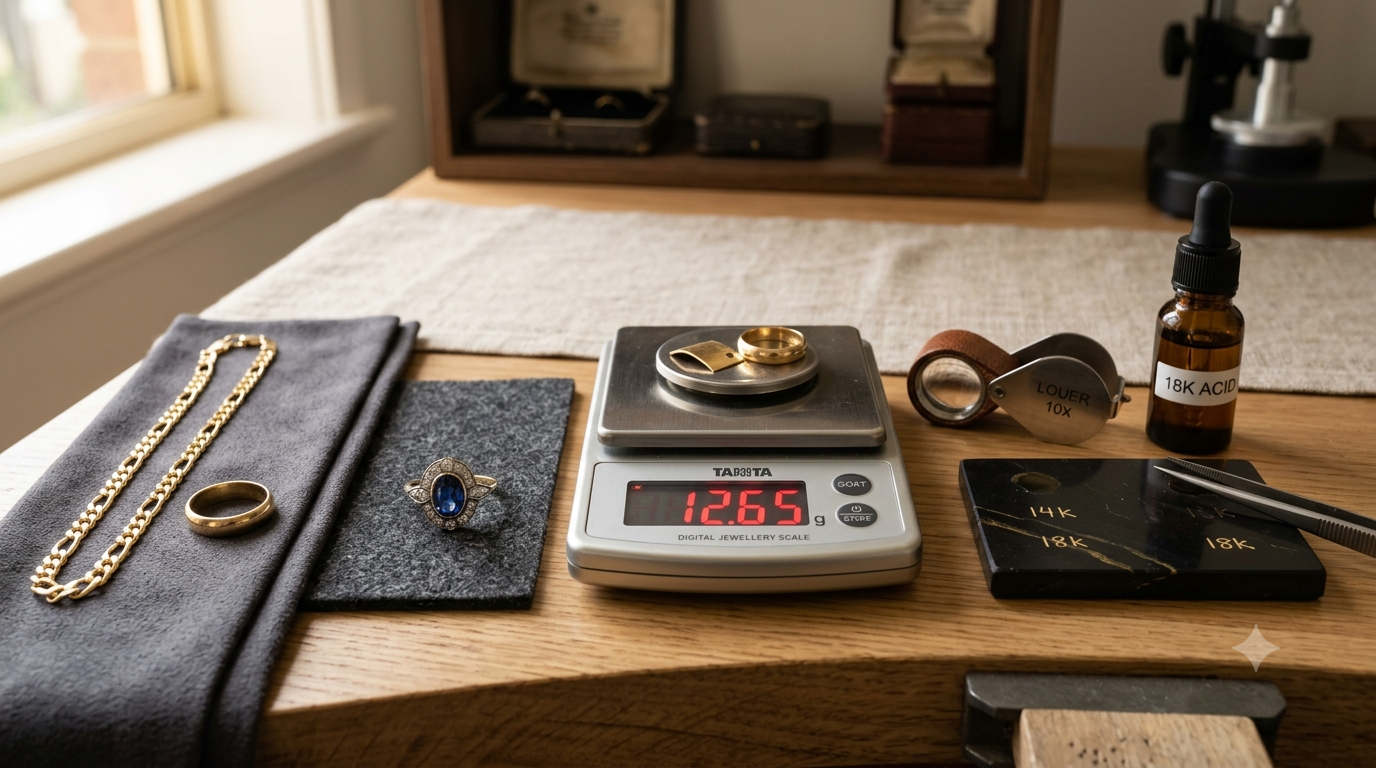
The gold is tested, often using acid testing or X-ray fluorescence (XRF), depending on the buyer's equipment.
The result is compared against the current gold price.
The buyer calculates an offer and explains it to you.
Most reputable buyers will ask for photo ID before completing a purchase.
Once you accept, payment follows — commonly by bank transfer, with some buyers also offering cash for smaller amounts.
Purity affects value directly. As a rough guide: 9ct gold is about 37.5% pure, 14ct is about 58.5%, 18ct is about 75%, 22ct is about 91.6%, and 24ct is close to 99.9% pure gold. Higher purity generally means a higher gold value for the same weight — but it isn't the only thing that decides your offer.
Why the Current Gold Price Matters
Gold trades on a live market, so the price per gram moves during the day. This is one reason two buyers — or the same buyer on two different days — can give different offers for an identical item.
A simple way to estimate the metal value is:
Estimated metal value = weight (g) × purity × gold price per gram
This formula gives a rough starting point, not a promised payout. Buyers usually pay somewhat below the theoretical metal value, because clasps, solder, gemstones, and other non-gold parts reduce the actual gold weight, and the buyer needs to cover testing, handling, and refining costs. Think of the formula as a way to sense-check an offer, not a fixed price you're owed.
Why Some Jewellery Takes Longer to Sell
Plain gold is usually quickest. Broken chains, single earrings, and plain rings can typically be tested and weighed without extra research, so an offer can often be made in one visit.
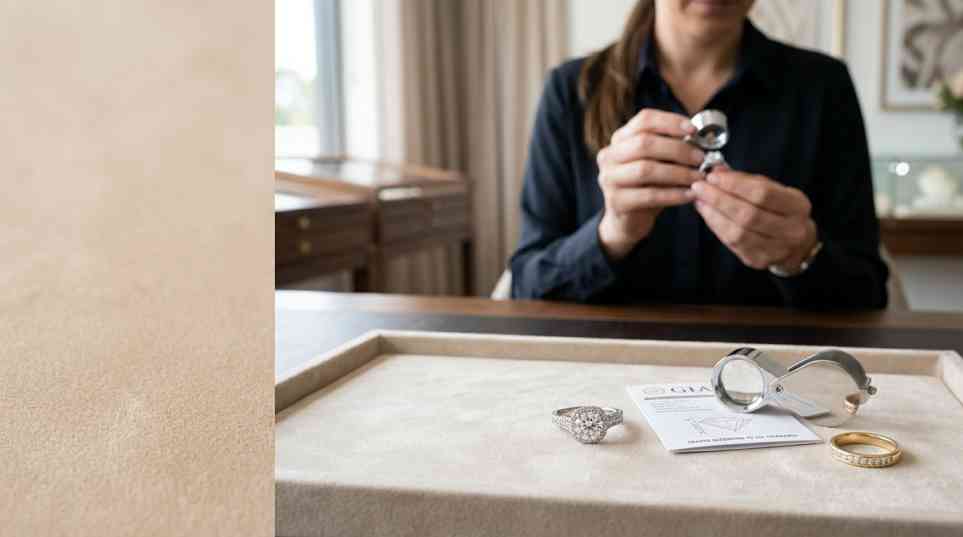
Gemstones and branded pieces need more checks. A diamond may need to be assessed for cut, colour, clarity, and certification. A branded item may need proof of authenticity. This naturally adds time, since the buyer is valuing more than just the gold.
Inherited jewellery can involve extra paperwork. If a piece came from an estate, ownership documents may be needed, and multiple family members may need to agree before a sale goes ahead. Jewellery bought overseas can also take longer, since unfamiliar hallmarks may need extra verification.
If your piece is old, unusually marked, or has obvious craftsmanship or gemstone value, it may be worth a specialist valuation before agreeing to a scrap-gold price — a jeweller as jewellery is sometimes worth more than a jeweller as metal.
The Fastest Offer Isn't Always the Best Offer
It's tempting to go with whoever pays quickest. But speed and value aren't the same thing. Before accepting an offer, it helps to ask:
What weight did you record?
What purity did you find?
What gold price per gram are you using?
Is the offer based on scrap value, resale value, or both?
Are any fees deducted?
How and when will I be paid?
For anything beyond a plain, low-value piece, comparing two or three Sydney buyers is a sensible step. A written quote — dated, with the weight, purity, and offer clearly shown — makes comparisons much easier. Be cautious of anyone pressuring you to decide on the spot.
If you're weighing up a scrap sale against something closer to an investment-grade approach, it's worth understanding how professional dealers handle precious metals more broadly — see Sydney Bullion Dealer: How Professionals Manage Your Precious Metals for more on that process.
What to Bring and How to Prepare
A little preparation can shorten your visit:
Government-issued photo ID
Original receipts, if you have them
Certificates or valuation papers
Gemstone reports
Original packaging for designer pieces
Bank details, if you plan to be paid by transfer
It also helps to sort your jewellery into groups — chains together, rings together, and so on — before you arrive, and to note down any questions you want answered.
When a Specialist Valuation Makes Sense
Not everything belongs in a same-day scrap sale. Antique pieces, signed designer jewellery, and items with meaningful gemstone value can sometimes be worth more sold as jewellery than melted for their gold content. If you're unsure, a specialist opinion before you sell — even just a quick second opinion — costs little compared to what it might protect. The same applies if you're deciding between selling loose jewellery or other precious-metal items like coins or bars; if that's part of your collection, it's worth looking at how people typically sell gold coins separately, since coins are often valued differently to jewellery.
FAQ
How long does it take to sell gold jewellery in Sydney?
A straightforward walk-in sale is often done within an hour. Jewellery with gemstones, brand value, or an unclear history typically takes longer, since it needs extra checks.
Can I get paid the same day?
Often, yes, for a simple walk-in sale where you accept the offer on the spot. Online sales and auctions take longer because of postage, testing, or auction scheduling.
Does gold purity affect how quickly it sells?
Not usually — purity affects value, not speed. What slows a sale down is anything that needs extra verification, such as gemstones, hallmarks that are hard to read, or ownership questions.
Should I get more than one quote?
For anything beyond a plain, low-value piece, yes. Comparing two or three buyers, and asking for a written quote, is a simple way to check you're getting a fair offer.
Final Answer
For a plain, straightforward piece, allow around one hour for a Sydney walk-in sale. For jewellery with gemstones, designer value, or family history, allow more — potentially several days for an online sale, or a few weeks if an auction or specialist valuation makes more sense. The extra time isn't wasted: it's usually what gets you a fairer result.
Written By
Team Times&Gold
Visit Us in Parramatta!
NO APPOINTMENTS NEEDED!
Located inside DLUX Jewellers
Opposite Commonwealth Bank