Australia's Highest Paying Gold Buyers $$$


Gold Buyer vs Pawnbroker in Sydney: Where Should You Sell Your Gold?
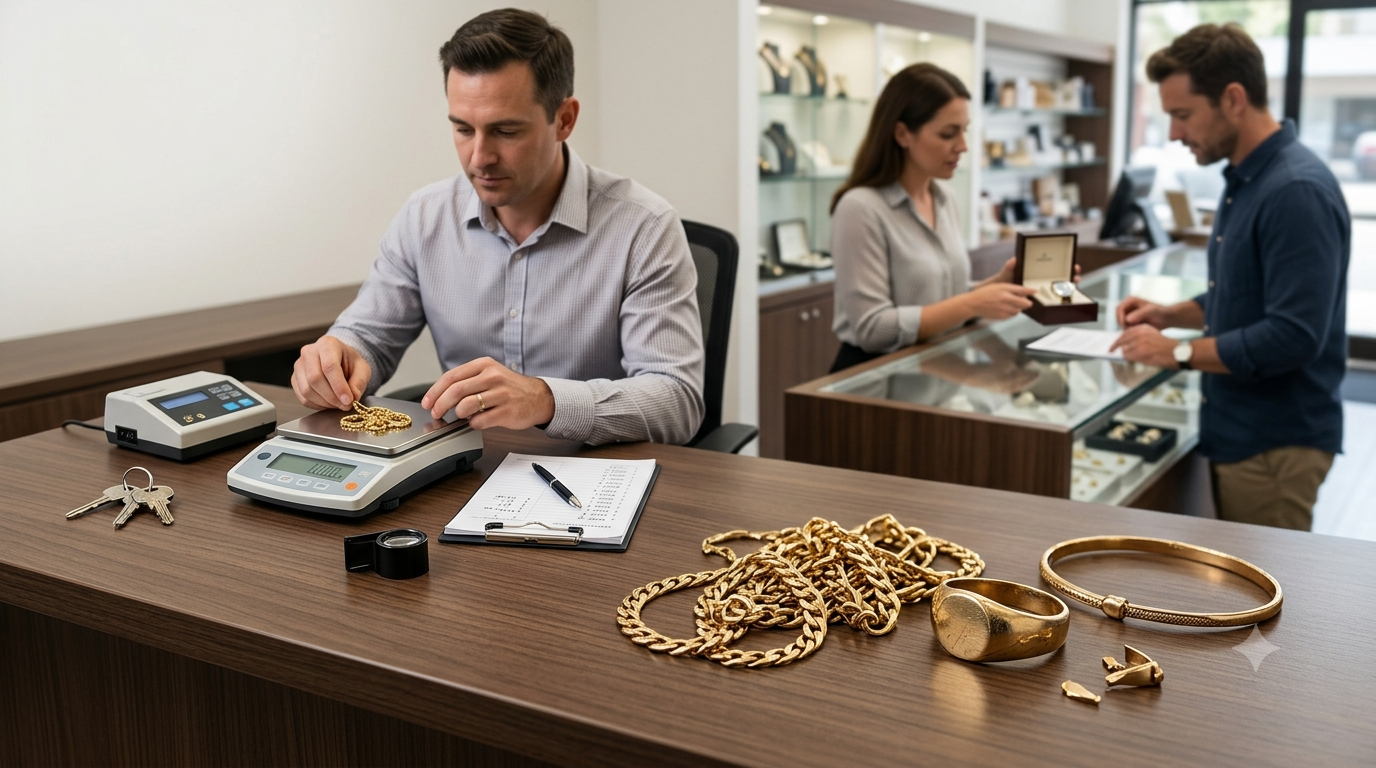
Quick answer: If you want to sell your gold for the best price, compare written offers from a specialist gold buyer and a jeweller. If you need short-term cash and want your gold back, a pawnbroker loan can work, but only if you're sure you can repay it. Which option wins depends on your item, your timing and the offer in front of you.
If you're deciding between a gold buyer and a pawn shop, you're really choosing between two different things. One pays you for your gold. The other lends you money against it. Once you see that difference, the decision gets much easier.
What Each Option Actually Does
Gold buyers pay for the metal
A gold buyer weighs your item, tests its purity and prices it from the current gold price. They then deduct their costs and margin and make you an offer.
For broken chains, single earrings and old scrap, that offer is based mostly on gold content. But a signed designer piece, an antique or a ring with quality stones may be worth more than its melt value. A good buyer should tell you if your item falls into that category.
Pawnbrokers mainly lend against your item
Many pawnbrokers focus on loans secured against items. You hand over your gold, receive money, and can usually collect the item later if you repay the loan plus interest and fees by the due date. Some also buy items outright, so ask which service you're being offered.
A loan is useful if you want to keep the gold. It becomes expensive if you can't repay on time, because you may lose the item.
Jewellers and valuers fill the gap
A jeweller may buy gold or give you a second opinion. An independent valuation helps if you own designer, antique or gemstone pieces. A valuation isn't a guaranteed sale price, but it tells you whether selling as scrap would undersell the piece.
Gold Buyer vs Pawnbroker at a Glance
Gold buyer
Pawnbroker (loan)
Pawnbroker (outright sale)
What you get
Payment for your gold
A loan against your gold
Payment for your item
Do you keep ownership?
No
Yes, if you repay
No
Main cost
Buyer's margin
Interest and fees
Buyer's margin
Main risk
Low offer if you don't compare
Losing the item if you can't repay
Low offer if you don't compare
Best for
Selling at the best price
Short-term cash while keeping the item
Fast sale
How to Estimate What Your Gold Is Worth
Know your gold's purity
Australian jewellery is usually marked in carats (ct). The carat number shows how much of the metal is pure gold:
9ct: 37.5% gold (often stamped 375)
14ct: 58.5% gold (often stamped 585)
18ct: 75% gold (often stamped 750)
22ct: 91.6% gold (often stamped 916)
24ct: 99.9% gold (often stamped 999)
Don't rely on the stamp alone. Marks can wear off or be wrong, so a reputable buyer will test the metal.
Do a quick melt-value estimate
Here's a simple formula:
Price per gram of pure gold × weight in grams × purity
Here's a worked example using a hypothetical price. It is not today's price. Say pure gold is A$200 per gram and you have a 10-gram 9ct chain:
Pure gold in the chain: 10 g × 0.375 = 3.75 g
Melt value: 3.75 g × A$200 = A$750
A buyer will offer less than this because they have testing, refining and business costs, and they need to make a profit. That's why you should ask each buyer what share of melt value they're paying. The answer varies from buyer to buyer, which is exactly why comparing is worth the effort.
Gold is priced internationally in US dollars per troy ounce (31.1035 grams), so make sure you check the current price in Australian dollars on the day you sell.
Don't weigh it yourself and trust the number
A kitchen scale isn't accurate enough for a precise valuation. Use your estimate as a rough guide only, and ask the buyer to weigh your gold in front of you.
Price, Speed and Risk
When a gold buyer makes sense
Choose a gold buyer if you want to sell outright and your priority is price. A specialist who deals in gold every day will have the equipment to test and price it properly. If you're comparing gold buyers in Sydney, look at their reviews, how clearly they explain their offer, and whether they're open about fees.
When a pawnbroker makes sense
A pawnbroker suits you if you need cash quickly and want the chance to get your gold back. Before agreeing, ask for the total repayment amount in writing, including interest and fees, plus the due date and what happens if you miss it. Then compare that with what an outright sale would pay. If you're not confident you can repay on time, selling outright is usually simpler.
If speed matters to you, it's worth knowing how long the process takes in Sydney before you head out the door.
Red flags to watch for
Walk away if a buyer:
Pressures you to accept straight away
Changes the offer without explaining why
Won't weigh and test your gold in front of you
Won't give you the offer in writing
Is vague about fees or deductions
A Simple Plan Before You Sell
Sort your gold. Separate chains, rings, broken pieces and anything with stones or a brand name.
Note the details. Write down any carat stamps, brand names and gemstones, and gather receipts or certificates.
Photograph everything. Take clear photos before you hand anything over.
Get at least three offers. Try a specialist gold buyer, a pawnbroker and a jeweller or valuer. Our guide to how to sell gold in Australia covers the process in more detail.
Ask each buyer the same questions. What's the weight? What purity did you test? What price per gram are you using? Are there fees? What's the final amount, and how and when will I be paid?
Expect to show photo ID. Licensed buyers generally record the details of sellers. Ask what they need before you visit.
Keep your paperwork. Get a receipt and the buyer's contact details.
If you decide not to accept an offer, make sure all your pieces are handed back to you before you leave.
Which Option Fits Your Situation?
You want the best price for scrap or unwanted gold: compare offers from specialist gold buyers.
You need short-term cash and want to keep the item: a pawnbroker loan may help, if you're sure you can repay.
You own a designer, antique or gemstone piece: get a valuation first.
You're not sure: get three written offers and compare them line by line.
Frequently Asked Questions
Do gold buyers always pay more than pawn shops?
No. It depends on the item, the buyer and how the offer is calculated. Compare written offers for the same pieces.
Should I sell my gold or pawn it?
Sell it if you don't need it back. Pawn it only for short-term cash when you're confident you can repay, and compare the total repayment with an outright sale price.
How much pure gold is in 9ct jewellery?
9ct gold is 37.5% pure gold. Use that figure in the melt-value formula above.
What should I bring when selling gold?
Bring your gold, photo ID and any receipts, certificates or valuations you have.
Do I need to pay tax on gold I sell?
It depends on the item and how you acquired it. Check the Australian Taxation Office's guidance or speak to a tax adviser.
Which Should You Choose?
A gold buyer isn't automatically better than a pawnbroker, and a pawnbroker isn't automatically faster or cheaper. The best option is the one where you understand exactly how the offer was calculated, the terms are clear in writing, and nobody is rushing you.
Written By
Team Times&Gold
Journal Insights
Visit Us in Parramatta!
NO APPOINTMENTS NEEDED!
Located inside DLUX Jewellers
Opposite Commonwealth Bank