Australia's Highest Paying Gold Buyers $$$


Should I Sell My Gold Jewellery or Keep It? How to Make the Right Choice in 2026
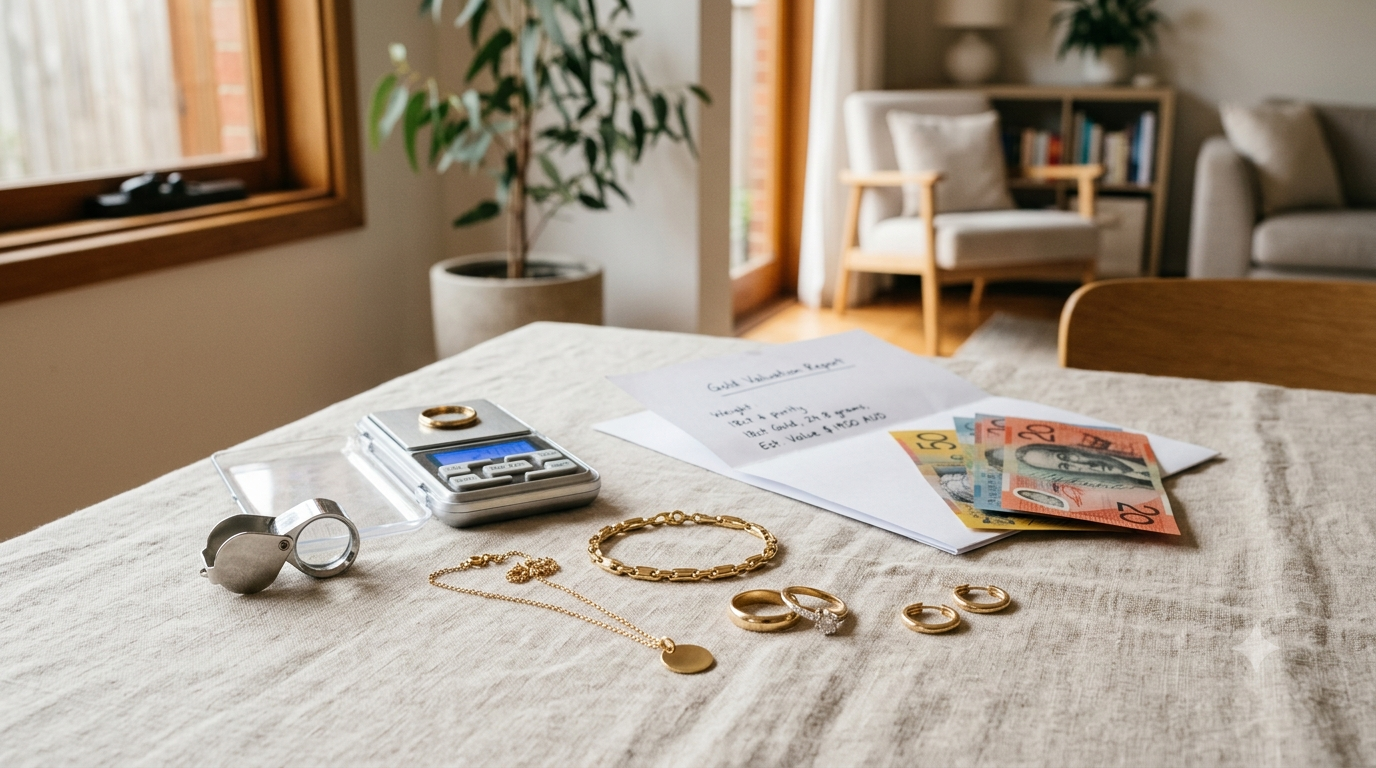
Gold jewellery can be worth a lot of money, especially when gold prices are high. But deciding whether to sell gold jewellery is not always simple. A piece may have a good market value, but it may also have family memories, a special design, or a story that money cannot replace.
The right choice depends on more than the current gold price. You should consider the jewellery's purity, weight, condition, design, brand, and personal value. Your financial needs also matter.
Before selling, compare at least two written offers. This can help you understand what your jewellery is really worth and avoid accepting a low offer.
Quick fact: 24K gold is about 99.9% pure, 18K gold is 75% pure, 14K gold is 58.5% pure, and 9K gold is 37.5% pure.
A certified appraiser can also help you understand the different types of value. As one useful rule of thumb: “A jewellery appraisal must state what the value means. One item can have several valid values.”
Sell Your Gold Jewellery When the Cash Has a Clear Purpose
Selling Can Make Sense During a Cash Squeeze
Selling jewellery can be a reasonable choice when the money solves an important financial problem.
For example, you may consider selling when the money will help you:
Pay urgent bills
Clear high-interest credit card debt
Pay for an important home or car repair
Cover necessary moving costs
Build an emergency fund
Deal with an unexpected financial expense
Think about the cost of other options before you sell. If you are carrying expensive credit card debt, selling an unused gold item could be cheaper than continuing to pay high interest.
However, selling just to pay for a short-term want may not be the best decision. Once you sell a special piece, getting the same item back may cost much more.
Example: Maya has an old 18K bracelet that she has not worn for years. She decides to sell it and uses the money to reduce costly credit card debt. She keeps her wedding ring and a family necklace because they have strong personal meaning. Her sale has a clear purpose, while the jewellery she keeps has value beyond its gold content.
Unworn, Damaged, or Outdated Pieces May Be Easy Wins
Some jewellery is easier to sell than other pieces. You may have items sitting in a drawer that you never wear and would not miss.
These can include:
Broken gold chains
Single earrings
Mismatched jewellery
Outdated designs
Damaged pieces
Jewellery you have not worn for many years
Even damaged jewellery can contain valuable gold. However, damage may reduce its value if you are selling it as a finished piece rather than for its metal content.
Before selling, check the item carefully. Look for designer marks, unusual details, gemstones, or signs that it may be old or rare.
Do not immediately sell branded or unusual jewellery as scrap. A specialist may value the design, brand, age, or craftsmanship more than a gold buyer would.
A Strong Gold Price Does Not Guarantee a Strong Payout
A common mistake is to look at the current gold price and assume that is what a buyer will pay for your jewellery.
The spot price is the market price for raw gold. A jewellery buyer may offer less because they need to test the item, process or refine the metal, cover business costs, and make a profit.
For a deeper explanation, see Why Do Gold Buyers Pay Less Than the Gold Price? Understanding this difference can help you set a realistic expectation before requesting quotes.
The basic melt-value calculation is:
Estimated melt value = weight × purity × current gold price
For example, a 20-gram 18K bracelet is not 20 grams of pure gold. Since 18K gold is 75% pure, it contains about 15 grams of pure gold.
Also remember that stones, clasps, and other non-gold parts may not be included in the amount a buyer pays.
Keep Your Jewellery When Its Value Goes Beyond the Gold Content
Sentimental Pieces Cannot Be Replaced at Market Value
Some jewellery should not be judged only by its gold weight.
A ring from your wedding, a necklace from a parent, or a pendant passed down through several generations may have emotional value that no buyer can include in a cash offer.
Ask yourself:
Could I replace this piece if I changed my mind?
Would I regret selling it?
Could someone in my family value it in the future?
Example: Daniel has several old gold items that he never uses. He sells some broken scrap jewellery but keeps his grandmother's pendant. The pendant may not contain a large amount of gold, but its family story makes it much more valuable to him.
Fine Design, Brand Names, and Rare Details May Raise Resale Value
Some jewellery may be worth more as a finished item than as scrap metal.
Get an appraisal before selling if your piece has:
A well-known luxury brand
A designer signature
A rare gemstone
Handmade details
An unusual vintage design
Original packaging or paperwork
A strong history or provenance
A scrap buyer may mainly look at gold purity and weight. They may not pay extra for the design, brand, age, or craftsmanship.
A vintage jewellery specialist or auction house may see something different.
If you think your piece is unusual, research similar auction results and speak with specialist dealers before accepting a scrap offer.
Gold Can Support a Long-Term Family Plan
Keeping jewellery can make sense when you have no urgent need for cash and the piece has a role in your family.
This may be true when the jewellery:
Is a family heirloom
Is still wearable
Has a special design
May be passed to a child or grandchild
Has important cultural or family meaning
But do not assume gold prices will always rise. Gold prices can go down as well as up, and jewellery often sells for less than its original retail price. Jewellery should not automatically be treated as a guaranteed investment.
If you keep valuable jewellery, record its details. Take clear photos and note the weight, purity, maker, condition, and purchase history. Keep receipts and appraisals in a safe place.
Find the True Value Before Accepting an Offer
Check Purity, Weight, and Marks at Home
Gold jewellery often has marks that show its purity. Common examples include:
999 or 24K: near-pure gold
750 or 18K: 75% gold
585 or 14K: 58.5% gold
375 or 9K: 37.5% gold
You can use a kitchen scale to get a rough weight, but do not treat this as an official valuation.
A piece may contain gemstones or other materials that add to its total weight but do not add the same value as gold. Gold plating can also make identification difficult.
Home testing has limits. For valuable jewellery, professional testing is safer. Avoid using acid tests yourself because they can damage an item.
Compare Buyers, Not Just Prices
Never assume the first buyer has given you the best deal.
Consider getting quotes from:
Reputable jewellers
Gold dealers
Auction houses
Vintage jewellery specialists
Online gold buyers with clear terms
When choosing a gold buyer, ask how they test the jewellery and how they calculate the final payment.
Ask every buyer:
How will you test the purity?
What weight are you paying for?
Are there any fees?
Will you deduct the weight of stones?
Can I get the jewellery back if I reject the offer?
When will I receive payment?
Keep a simple comparison record:
Buyer
Purity
Net Weight
Offer
Fees
Payment
Return Terms
Buyer A
18K
20 g
$___
$___
Bank transfer
Yes/No
Buyer B
18K
20 g
$___
$___
Bank transfer
Yes/No
Buyer C
18K
20 g
$___
$___
Cash/transfer
Yes/No
The goal is to compare the net amount you will actually receive, not just the headline offer.
Learn How Buyer Fees Change Your Payout
Different buyers may have different deductions. These can include testing, refining, shipping, insurance, stone removal, or auction commissions.
For example:
Item
Weight
Purity
Pure Gold Content
Offer
18K bracelet
20 g
75%
15 g
Compare buyers
14K ring
8 g
58.5%
4.68 g
Check stone weight
These are sample figures, not a live price. Always check the current gold price from a trusted market source on the day you sell.
Sell Safely and Protect Your Money
Pick a Buyer With a Clear Paper Trail
A trustworthy buyer should clearly explain how they value your jewellery.
Look for:
A physical business address
Registered business details
Written terms
Secure jewellery handling
Clear payment records
Independent customer reviews
A proper receipt or invoice
Be careful with buyers who pressure you to decide quickly, refuse to explain their testing process, offer payment without a receipt, or suddenly change the price after taking your jewellery.
Take photos of your jewellery before handing it over. Keep copies of all paperwork.
Understand Tax, Identity, and Local Rules
Tax rules for selling gold jewellery can differ by country, state, and situation.
Depending on where you live, you may need to consider:
Tax on a gain
Reporting requirements
Cash payment limits
Identity checks
Special rules for inherited or gifted jewellery
Keep your original receipts, appraisals, sale invoices, proof of payment, and photographs.
If the jewellery is inherited, gifted, antique, or unusually valuable, consider asking a tax adviser about your specific situation.
Use a Decision Checklist Before You Commit
Sell now if:
You need money for an important financial priority.
The jewellery has little personal value.
You have compared several offers.
The offer properly considers purity and weight.
Keep it if:
The piece has deep emotional meaning.
It may have brand, antique, or design value.
You would regret losing it.
You do not currently need the money.
Wait and get an appraisal if:
The jewellery is signed, old, rare, or gemstone-set.
A buyer calls it scrap without a full review.
You cannot confirm its purity.
Try this simple seven-day rule: put the jewellery away for seven days. If selling still feels right after that, get two more offers before making your final decision.
Make the Choice With Value, Need, and Regret in Mind
So, should you sell or keep your gold jewellery?
Sell gold jewellery when it solves a real financial problem and the item has little personal, design, or extra resale value. Keeping it may be better when the piece has a strong family story, rare design, brand value, or emotional importance.
Before making the decision:
Check the purity.
Weigh the item.
Research its brand and age.
Look for gemstones and special details.
Get an appraisal when needed.
Compare written offers.
Check fees and payment terms.
Review the tax rules that apply to you.
The best sale is not always the offer with the biggest number. The best choice is the one that gives you fair value without causing lasting regret.
As a useful final rule from the appraisal world: “Know what you own before you decide what it is worth.”
Before selling, record each item's karat, weight, maker, condition, photos, and offers. A simple gold jewellery valuation checklist can help you compare everything clearly and make a more confident decision.
Written By
Team Times&Gold

Visit Us in Parramatta!
NO APPOINTMENTS NEEDED!
Located inside DLUX Jewellers
Opposite Commonwealth Bank