Australia's Highest Paying Gold Buyers $$$


Sell Gold Jewellery: Is Old Gold Jewellery an Investment or Just Stored Wealth?
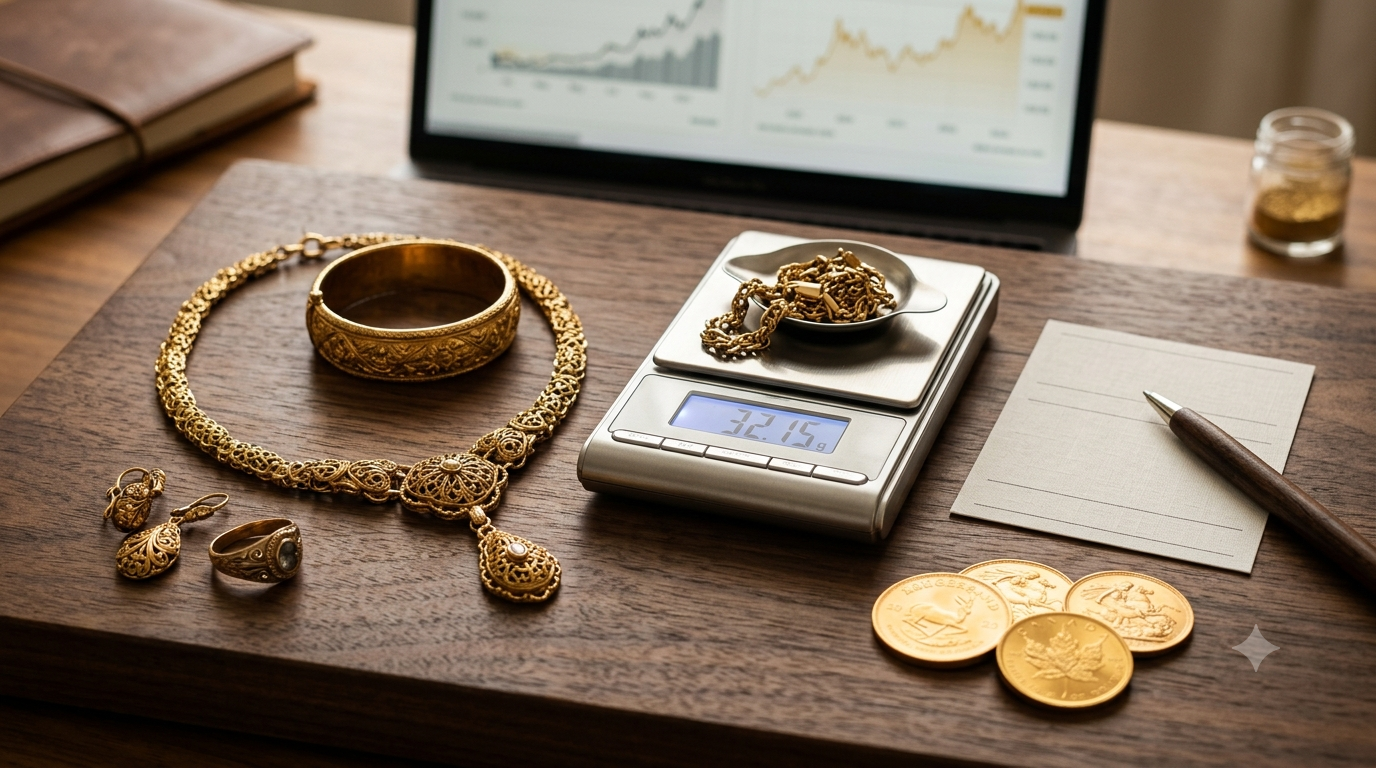
A family gold necklace can become more valuable as gold prices rise, but that does not automatically mean it was a profitable investment. If you want to sell gold jewellery, the amount you receive may be considerably different from what you originally paid because of making charges, taxes, purity, resale deductions, and dealer margins.
So, is old gold jewellery an investment, or is it simply stored wealth?
The answer depends on what you paid, how much pure gold the jewellery contains, what it is worth today, and what you can actually receive when you sell it. Jewellery can preserve wealth over long periods, but gold price gains alone do not tell the full story.
What Makes Old Gold Jewellery Different From Gold Investments?
Gold jewellery has value in several different ways. Understanding those layers is essential before deciding whether to hold, sell, or remake an old piece.
Jewellery Value Has Three Separate Parts
The value of a jewellery item can generally be divided into three areas:
Gold content: The value of the actual gold based on weight and purity.
Craft and design: The workmanship, style, brand, or rarity of the piece.
Emotional value: Family history, cultural significance, wedding memories, or sentimental importance.
When jewellery is resold for its gold content, buyers may focus primarily on the metal rather than what you originally paid for the craftsmanship.
A simple way to estimate the metal value is:
Melt value = weight × purity × current gold price
For example, a 20-gram 22-carat bangle contains approximately 18.33 grams of pure gold. Its resale value therefore starts with the value of that pure gold rather than its original retail price.
Making Charges and Taxes Reduce the Starting Return
One of the biggest reasons jewellery may underperform as an investment is that the original purchase price includes costs that may not be recovered when you sell.
These can include:
Making charges
Wastage charges
Applicable taxes
Hallmark or certification fees
Retailer charges
Making charges can vary considerably depending on the design and market. Intricate jewellery generally carries higher labour costs than simple pieces.
Before selling, locate the original bill, purity documentation, and certificate if available. Then compare what you originally paid with today's estimated melt value.
Gold Jewellery Earns No Cash Income
Unlike some other assets, jewellery does not generate income while you own it.
Shares may pay dividends. Bonds can provide interest. Property can produce rent. Gold jewellery simply remains in your possession until you sell it, exchange it, or use it as collateral.
Its potential benefit is different: gold can act as a store of value and may help preserve purchasing power during periods of inflation, currency weakness, or financial uncertainty.
That makes jewellery better described as stored wealth than an income-producing investment.
When Old Gold Jewellery Acts Like Stored Wealth
It Can Preserve Value Across Long Periods
Gold has been used as a store of wealth for generations. It has no corporate issuer that can default, is traded internationally, and can be transferred between generations.
However, preserving value is not the same as generating a strong investment return.
Imagine a family necklace purchased 25 years ago. If the gold price has risen significantly, the necklace may now contain considerably more valuable gold. But the owner still needs to account for the original making charges and any deductions applied when selling.
A rise in gold prices therefore does not automatically prove that the jewellery investment beat inflation.
Family Jewellery Can Be Worth More Than Its Metal
Financial value is not always the only value that matters.
An old necklace may represent a wedding, inheritance, cultural tradition, or connection to previous generations. An antique piece may also have design or historical value that exceeds its melt value.
This creates an important distinction:
What is the jewellery worth to a buyer?
What is the jewellery worth to your family?
If a piece has significant sentimental value, selling it purely because gold prices are high may not be the best decision.
Gold Can Support Cash Needs During a Crisis
Unused jewellery can provide access to cash when necessary. An owner may sell it, exchange it for another piece, or use it as collateral for a gold-backed loan.
Each option has different consequences. Selling provides cash but permanently transfers ownership. A loan allows you to retain the possibility of getting the jewellery back, but interest and repayment obligations create additional risk.
If you decide to sell, compare at least three buyers. Ask for purity testing, a written weight and price breakdown, and the final amount you will receive.
If you are researching options to sell, a service offering Cash for Gold can be one option to compare alongside established local dealers and other reputable buyers.
When Old Gold Jewellery Works as an Investment
Rising Gold Prices Can Create a Real Return
Old jewellery can produce a genuine financial gain when its eventual sale proceeds exceed the full amount originally invested.
The basic calculation is:
Net return = sale proceeds − total purchase cost
And:
Return percentage = net return ÷ total purchase cost × 100
For example, suppose a piece cost £2,000 and eventually sells for £2,350 after applicable deductions. The nominal gain is £350, representing a 17.5% return before considering tax, storage, insurance, or inflation.
That final comparison matters. A nominal gain may look attractive until you compare it with the rise in living costs over the same period.
Rare Pieces May Earn More Than Melt Value
Not every piece of jewellery should be treated as scrap gold.
Antique designs, signed pieces from recognised makers, rare regional styles, and jewellery with documented age and provenance may attract specialist buyers willing to pay more than the metal value.
For example, a plain 22-carat chain and a rare signed antique piece could contain similar quantities of gold but command very different prices.
Before melting or selling an unusual piece, consider getting an appraisal from a qualified jewellery expert. Destroying a potentially collectible item could eliminate its additional value.
Jewellery Often Performs Differently From Simpler Gold Products
If your only objective is exposure to the gold price, jewellery may not be the most straightforward option.
Other approaches can include:
Gold exchange-traded funds
Other regulated gold investment products, where available
Jewellery has an important advantage: you can wear and enjoy it. But that benefit comes with manufacturing costs and potentially wider resale spreads.
A useful rule is to treat jewellery as a mixed asset: part adornment, part stored wealth. Do not assume that the entire retail purchase price represents an investment in gold.
How to Check What Old Gold Jewellery Is Worth Today
Confirm Purity, Weight, and Hallmarks
Before requesting an offer, collect as much information about the jewellery as possible.
Check:
Hallmark or purity stamp
Total weight
Weight of stones and non-gold components
Brand or maker mark
Original receipt
Certificate or valuation documents
Common gold purities include 24-carat, which is close to pure gold, 22-carat at approximately 91.6% purity, and 18-carat at 75% purity.
Hallmarking requirements differ between countries. In India, for example, buyers should check relevant BIS hallmark and HUID information, while UK consumers can refer to the official hallmarking system.
Do not rely only on colour, appearance, or a basic magnet test to determine purity.
Compare Offers Using the Same Gold Price
Comparing the final offer is more important than comparing headline prices.
Ask every buyer:
What live gold rate are you using?
What purity have you assigned to the item?
What is the net gold weight?
Are stones or other materials being deducted?
Are there testing, melting, or refining fees?
What is the final cash amount?
Record each offer in a simple table containing the dealer, purity, net gold weight, rate per gram, deductions, and final payment.
Use established dealers, check reviews and relevant trade-body membership, and never hand over jewellery without receiving a proper receipt.
Calculate the Break-Even Gold Price
You can estimate the gold price required to recover your original cost with:
Break-even price = total purchase cost ÷ net pure-gold weight
Suppose you paid £1,500 and the jewellery contains 12 grams of pure gold. Your basic break-even figure would be £125 per gram before selling deductions.
This calculation gives you a useful starting point, but it does not account for every cost or the value of your time, storage, insurance, or sentimental attachment.
The Costs, Risks, and Tax Rules Owners Often Miss
Resale Deductions Can Cut the Headline Value
A dealer may quote a gold value that sounds impressive, but the amount you actually receive can be lower.
Possible deductions include:
Dealer margin
Testing fees
Refining costs
Stone removal
Melting losses
For example, if the calculated gold value is £3,000 and a dealer applies a 6% margin plus £50 in fees, the final amount would be £2,770.
Focus on the final cash offer, not simply the quoted gold rate.
Storage, Theft, and Family Disputes Add Hidden Costs
Physical jewellery also creates risks that are easy to overlook.
Owners may face:
Theft risk
Safe-deposit costs
Insurance limitations
Lost documentation
Disputes over inherited jewellery
Photograph valuable pieces, record their weight and purity, review insurance coverage, and document important inherited items as part of your estate planning.
Tax Treatment Depends on the Country
Tax rules can vary depending on where you live, how long you owned the jewellery, how you acquired it, and the circumstances of the sale.
Capital gains, inheritance, gift, sales tax, and VAT rules may all be relevant in different jurisdictions.
Keep purchase bills, valuation reports, inheritance documents, and sale receipts. For a significant transaction, check current official government guidance or speak with a qualified tax adviser.
A Clear Decision Test: Sell, Hold, Remake, or Invest Elsewhere
Sell When the Jewellery No Longer Serves a Purpose
Selling may make sense when jewellery is damaged, unused, has little sentimental value, or could help you address expensive debt or an important financial need.
Compare the potential proceeds with alternatives such as reducing high-interest debt, building emergency savings, paying for essential repairs, or meeting another financial goal.
Do not rush into a sale simply because you need money immediately. Compare multiple offers first.
Hold or Remake When Personal Value Still Matters
Holding can make sense if you wear the piece, expect another family member to use it, or value gold as long-term stored wealth.
Remaking may be an alternative when you still want the gold but no longer like the design. However, remodelling involves new labour costs, so obtain a written quote before approving the work.
Choose a Separate Gold Investment for Pure Price Exposure
If your primary objective is to track gold prices rather than own wearable jewellery, compare jewellery with other regulated gold products, coins, bars, or low-cost gold funds where appropriate.
Your overall gold allocation should reflect your financial goals and risk tolerance. Gold should not automatically replace emergency savings or become the destination for all of your investments.
Conclusion: Old Gold Jewellery Is Wealth, But Not Always an Investment
Old gold jewellery is usually stored wealth first and an investment second.
It becomes a genuine investment only when its net sale value, after purchase and selling costs, provides a return that compares favourably with inflation and alternative uses of your money.
Before making a decision, check the purity and net weight, locate your original documents, calculate the break-even price, compare at least three written offers, and consider tax and insurance implications.
Most importantly, separate financial value from personal value.
Keep pieces that carry genuine family meaning. Consider selling unused jewellery when the money has a better purpose. And if your goal is simply to gain exposure to gold prices, compare jewellery with simpler gold investment options.
The smartest decision is not always to sell or hold. It is to understand exactly what your jewellery is worth, what it costs you to keep or sell, and what the money could do elsewhere.
Frequently Asked Questions
Is old gold jewellery a good investment?
Old gold jewellery can preserve wealth, but it is not always a strong investment. Making charges, taxes, resale deductions, and dealer margins can reduce your actual return. To determine whether it was profitable, compare your final sale proceeds with the total amount originally paid and account for inflation.
How do I calculate the value of old gold jewellery?
Start by checking the jewellery's purity and net gold weight. A basic calculation is: melt value = weight × purity × current gold price. The final amount you receive may be lower because of testing, refining, stone removal, or dealer deductions.
Should I sell my old gold jewellery or keep it?
The decision depends on both financial and personal value. Selling may make sense if the jewellery is unused, damaged, or no longer meaningful to you. If it has strong sentimental value or you regularly wear it, holding or remaking it may be more appropriate.
What should I check before I sell gold jewellery?
Check the hallmark, purity, total weight, net gold weight, original receipt, and any certificates you have. Ask several reputable buyers for written offers and compare the gold rate, deductions, fees, and final cash amount rather than choosing based only on the quoted price per gram.
Do making charges increase the resale value of gold jewellery?
Usually, making charges paid when purchasing jewellery are not fully recovered when the item is resold for its gold content. This is one reason jewellery can perform differently from gold bars, coins, or other products designed primarily to provide gold-price exposure.
Can antique gold jewellery be worth more than its gold value?
Yes. Rare antique designs, signed pieces, recognised makers, unusual regional styles, and jewellery with documented provenance may attract a premium from specialist buyers. Before selling or melting an unusual piece, consider obtaining an independent appraisal.
How many gold buyers should I compare before selling?
Comparing at least three written offers can help you identify a fairer deal. Ask each buyer to explain the purity, net gold weight, gold rate, deductions, fees, and final payment. This makes it easier to compare offers on the same basis.
Is selling gold jewellery better than taking a gold-backed loan?
It depends on your circumstances. Selling provides cash without creating a repayment obligation but means you give up ownership. A gold-backed loan allows you to retain the possibility of recovering the jewellery, but interest and missed-payment risks can make it costly.
What documents should I keep when selling inherited gold jewellery?
Keep any inheritance records, purchase bills, valuation reports, purity certificates, hallmark information, and sale receipts. These documents can help establish ownership, value, and the transaction history if questions arise later.
Is gold jewellery better than gold bars or funds as an investment?
It depends on your objective. Jewellery provides wearable and cultural value, while bars, coins, and regulated gold investment products may provide more direct exposure to gold prices. Each option has different costs, risks, liquidity, and tax considerations.
What is the most important thing to remember before selling old gold?
Focus on the final amount you will receive, not just the advertised gold price. Confirm purity and net weight, compare multiple offers, understand deductions, consider tax implications, and decide whether the jewellery has sentimental or collectible value before agreeing to a sale.
Written By
Team Times&Gold
Journal Insights
Visit Us in Parramatta!
NO APPOINTMENTS NEEDED!
Located inside DLUX Jewellers
Opposite Commonwealth Bank