Australia's Highest Paying Gold Buyers $$$


Sell Silver Bullion vs. Silver Jewellery: What’s the Difference?
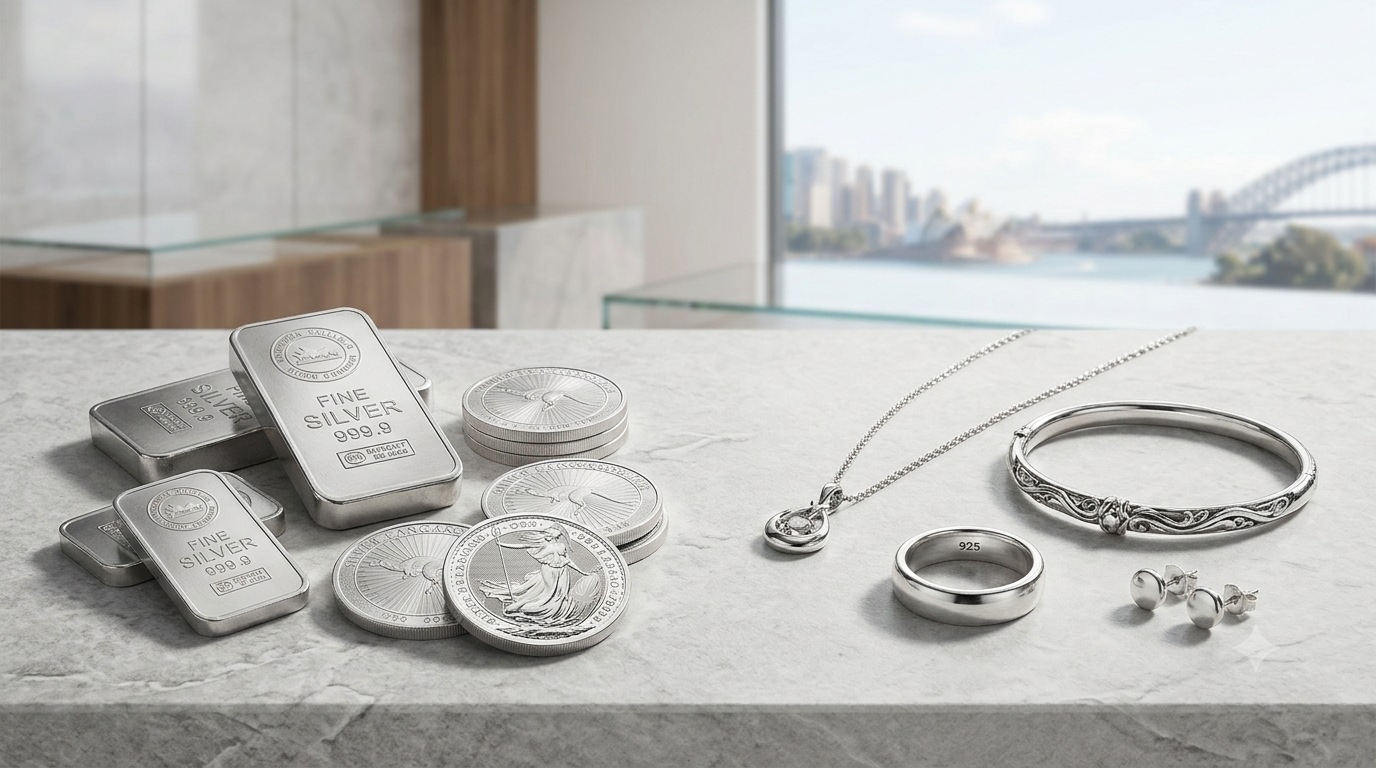
A silver coin and a silver necklace may contain the same metal, but they can get very different offers when you sell them. Why? The answer is simple: buyers do not always value silver items in the same way.
Silver bullion is usually bought for its metal content and investment value. Silver jewellery, on the other hand, may have value because of its design, brand, age, gemstones, or condition.
If you plan to Sell Silver Bullion Sydney, it is important to know what affects the price before you accept an offer. This guide explains the main differences between silver bullion and jewellery, how buyers calculate value, and where you may get the best type of offer for each item.
Why the Same Silver Can Get Two Very Different Offers
Bullion Is Bought for Its Metal Value
Silver bullion includes items such as silver bars and investment coins, made mainly for investment or to hold silver as a physical asset.
For bullion, the main factors are usually:
Weight
Silver purity
Current silver spot price
Brand or refiner
Type and rarity of the coin
Market demand
A standard silver bar is generally valued close to the value of the silver it contains. Some popular coins can also carry a premium because investors and collectors want them, so a bullion buyer will usually focus on pure silver content rather than appearance.
Jewellery May Include More Than Silver
Silver jewellery can be different. A necklace, ring, bracelet, or pair of earrings may have value beyond the silver itself.
A buyer may consider:
The design
The maker or brand
Age
Condition
Gemstones
Demand for the style
Silver content
Not every jewellery buyer will pay extra for these features, though. A scrap buyer may simply calculate how much silver the item contains — which is why a piece that originally cost hundreds of dollars can receive a much lower offer when it's valued only as scrap metal.
Purity and Marks Affect the Calculation
Look for a hallmark or stamp before selling silver. Two common marks are:
925 – sterling silver, which contains 92.5% silver by weight
999 – fine silver, which is about 99.9% silver
A stamp is useful, but it isn't always proof of purity — marks can wear off, be missing, or occasionally be misleading — so buyers may test the item before making a final offer. Testing matters most when the item is old, damaged, unmarked, or valuable enough to justify a closer check.
How Buyers Work Out What Your Silver Is Worth
Start With Weight, Purity, and the Spot Price
A simple way to estimate the metal value of silver is:
Item weight × silver purity × current silver spot price = estimated silver value
For example, imagine a 100-gram sterling silver item. Sterling silver is 92.5% pure, so the item contains about 92.5 grams of pure silver.
Spot prices are usually quoted per troy ounce, not per gram, and a troy ounce (about 31.1 grams) is different from a standard household ounce. So to estimate value, you'd convert: 92.5 grams ÷ 31.1 grams ≈ 2.97 troy ounces, then multiply that figure by the current spot price per troy ounce.
This gives a melt-value estimate only — not a guaranteed selling price, and not a real quote from any specific buyer.
Expect Deductions, Premiums, and Fees
The amount you calculate from the spot price isn't always the amount you receive. A bullion dealer may offer a price based on the current market rate but include a dealer margin. Some sought-after coins may carry a premium above their basic metal value.
A refiner or scrap buyer may deduct costs for:
Testing
Processing
Melting
Refining
Handling
Resale
Jewellery adds another wrinkle: if a piece contains gemstones, a buyer may remove the stones or value only the silver content, depending on the sale route. This is why it's worth asking exactly how any offer was calculated before you accept it.
Use Market Data as Context, Not a Promise
Silver prices move because of investment demand, industrial use, supply, economic conditions, and other market factors. The Silver Institute's World Silver Survey 2025 reported industrial silver demand of about 680.5 million ounces in 2024 — a record high and a 4% increase year-over-year — which shows how large a role industrial demand plays in the wider silver market.
That said, broad market demand doesn't tell you exactly what your individual ring, necklace, coin, or bar is worth. Always check the live silver spot price on the day you request a quote.
Where Bullion and Jewellery Tend to Sell Best
Sell Bullion to Buyers Who Trade Investment Metal
Silver bullion is usually best compared with buyers who regularly deal in investment metals — specialist bullion dealers, coin shops, precious metal buyers, or reputable online bullion buyers.
Before accepting an offer, ask how the dealer sets its buying price. For example: "What percentage of the current silver spot price are you offering?" Also ask whether testing, shipping, or handling fees are included. The most useful comparison isn't the advertised price — it's the final amount you'll actually receive.
Sell Jewellery Through More Than One Route
Silver jewellery gives you more possible selling routes: jewellers, silver buyers, auction platforms, local resale shops, or specialist antique/designer dealers.
The important question is whether the buyer sees your item as a finished piece or simply as scrap silver. A plain, damaged silver chain may have little resale demand as jewellery, but a branded or antique piece could be different. If the item has a known designer, an unusual design, gemstones, or significant age, consider getting a specialist opinion before accepting a scrap offer.
If you also have unwanted gold pieces, you may come across services offering to Sell Gold Jewellery In Sydney. The same basic lesson applies: understand whether the buyer is pricing the item for its metal content, its resale value as jewellery, or both.
Check the Buyer Before Handing Anything Over
Choosing a buyer is just as important as understanding your silver. Look for:
Clear pricing information
Recent customer feedback
Transparent payment terms
A physical business address
Written offers showing weight, purity, deductions, and final payment
In New South Wales, many second-hand dealers are required to be licensed — it's reasonable to ask a buyer for their business details or ABN if this isn't already clear on their website. A professional Gold Buyers service may also handle silver and other precious metals, but you should still ask how your specific item will be valued.
If you want a second opinion before selling, an independent appraiser can explain how testing and weighing typically work, and it's good practice to ask any buyer whether items can be weighed and tested in front of you — especially when selling several pieces at once. You can also read more on Why People Trust a Professional Gold Buyer when comparing businesses.
Real-World Examples Show Why the Sale Route Matters
The following are illustrative examples only, not real market quotes.
A Silver Bar Compared With a Sterling Chain
Imagine a 100-gram fine silver bar and a 100-gram sterling silver chain. The bar contains about 99.9 grams of silver; the chain contains about 92.5 grams (assuming no other materials), so the bar has a slightly higher basic metal value.
The final offer can still vary between buyers, though. A bullion dealer may make an investment-metal offer for the bar, while a jewellery buyer might weigh the chain's design into their offer — or a scrap buyer may focus almost entirely on its silver content. The chain's original retail price doesn't automatically become its resale value.
A Coin With a Collector Premium
Some silver coins are worth more than their metal content. A rare, old, limited-edition, or highly sought-after coin may carry collector value — selling it simply for scrap silver could mean losing that value. Before selling a potentially collectible coin, check its date, mint mark, condition, and demand among collectors, and don't clean or polish it first: cleaning can reduce a coin's appeal to collectors.
Choose the Sale Route That Fits Your Item and Goal
Use This Quick Decision Guide
Silver bullion coin or bar: Compare specialist dealer buy prices and check whether it carries a premium above metal value.
Plain, damaged, or unmatched jewellery: Get several scrap-silver quotes and compare the final payment after deductions.
Branded, antique, or gemstone jewellery: Consider a jewellery appraisal before accepting a melt-value offer.
Prepare Before Requesting Offers
Separate your bullion from your jewellery, group similar items together, and photograph any hallmarks. You can weigh items at home for a rough idea of weight, though a home scale may be less accurate than a professional one — use the number only as a guide. Then ask at least three buyers for written offers.
Most importantly, don't clean, polish, remove gemstones, or alter an item before it's been checked — something that looks like simple scrap may have value that isn't obvious at first glance.
Get the Right Value for the Silver You Own
The main difference between silver bullion and silver jewellery is how buyers look at the item. Bullion is usually valued mainly for its silver content and investment market value; jewellery may also have value as a finished product because of its design, brand, age, gemstones, and condition.
Before selling, identify what you own, check its purity and weight, estimate its silver content, and compare that against the current spot price. Then get quotes from buyers who regularly handle that type of item — comparing like with like. A scrap offer for a silver necklace shouldn't be compared with a specialist offer for a collectible coin.
Take your time, ask how each offer was calculated, check every deduction, and choose a selling route that matches the item you actually own.
Written By
Team Times&Gold
Journal Insights

Visit Us in Parramatta!
NO APPOINTMENTS NEEDED!
Located inside DLUX Jewellers
Opposite Commonwealth Bank