Australia's Highest Paying Gold Buyers $$$


Selling Inherited Gold Jewellery in Sydney: A Practical Guide
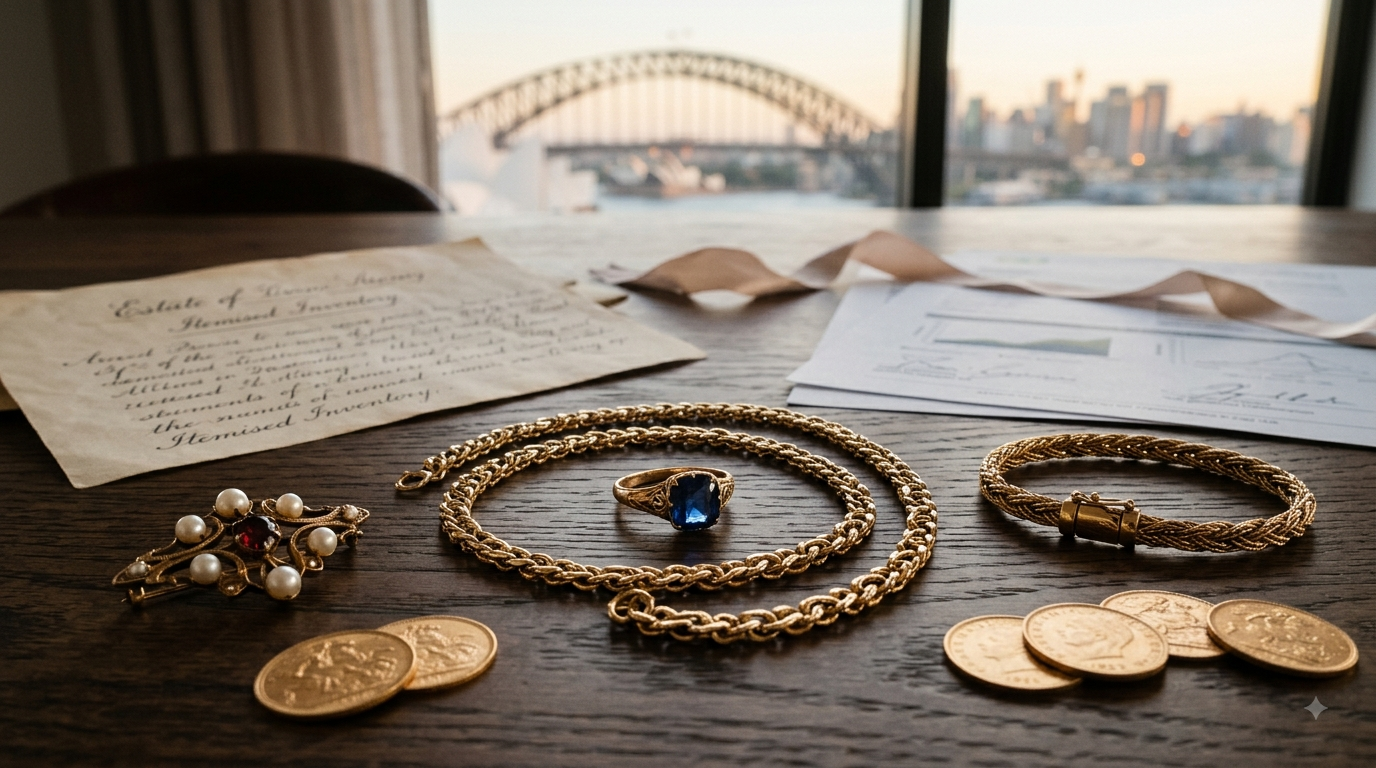
Inheriting gold jewellery is rarely just a financial decision. A ring, chain, bracelet or brooch may carry decades of family memories, and when several beneficiaries are involved, deciding what happens next can be difficult.
If selling is the right choice, the best place to start is by understanding exactly what you have, who has the authority to sell it, and whether the jewellery is worth more than its gold content.
If you're comparing Best Gold buyers In Sydney, remember that the highest advertised price is not necessarily the best outcome for every piece. A gold buyer may primarily assess the metal, while a jeweller, specialist valuer or auction house may recognise additional value in gemstones, craftsmanship, a recognised maker, age or rarity.
The right selling option depends on the jewellery itself.
Step One: Confirm You Have the Right to Sell
Before taking inherited jewellery to a buyer, establish who has the legal authority to deal with it.
If the estate is still being administered, the executor is responsible for dealing with estate assets according to the will and applicable legal requirements. Depending on the circumstances, probate or letters of administration may also be relevant.
If several beneficiaries have an interest in the jewellery, do not assume that one person can simply sell everything. Make sure the people entitled to the items agree on what should happen and, where necessary, document how sale proceeds will be divided.
It is useful to gather any available:
Will and estate documents
Probate or administration documents
Purchase receipts
Previous valuations
Insurance records
Gemstone certificates
Photographs of the jewellery
These records can help establish the history and ownership of an item and may be particularly useful if it is branded, antique or unusually valuable.
Consider the sentimental value before selling
There is also a practical reason not to rush.
Photograph the jewellery and give family members an opportunity to decide whether they want to keep particular pieces. A grandmother's ring, for example, may have relatively modest scrap value but significant sentimental value to one beneficiary.
An independent valuation can help the family make that decision based on information rather than assumptions.
What about tax on inherited jewellery?
Receiving an inheritance generally does not mean you automatically pay tax simply because you inherited the asset. However, tax consequences can arise when an inherited asset is later sold.
The Australian Taxation Office includes jewellery among examples of collectables, and specific Capital Gains Tax rules can apply to collectables. There are also specific rules for inherited assets, including how the asset's cost base is determined.
The outcome depends on the circumstances of the estate, the jewellery, its acquisition history and the eventual sale. For a valuable collection or an unusual situation, speak with a registered tax agent or accountant rather than relying on a general rule.
Keep the valuation, sale receipt and estate records so you have supporting documentation if you need to establish the item's history or tax position later.
Step Two: Work Out What the Jewellery Is Worth
Check the gold purity and weight
Gold jewellery can contain very different amounts of pure gold.
Common purity levels include:
9-carat: 37.5% pure gold
14-carat: 58.5% pure gold
18-carat: 75% pure gold
24-carat: generally fine gold, commonly around 99.9% purity
A hallmark can provide an initial indication of purity, but it should not automatically be treated as conclusive. A professional buyer can test the metal before calculating an offer.
A simplified way to estimate the metal component is:
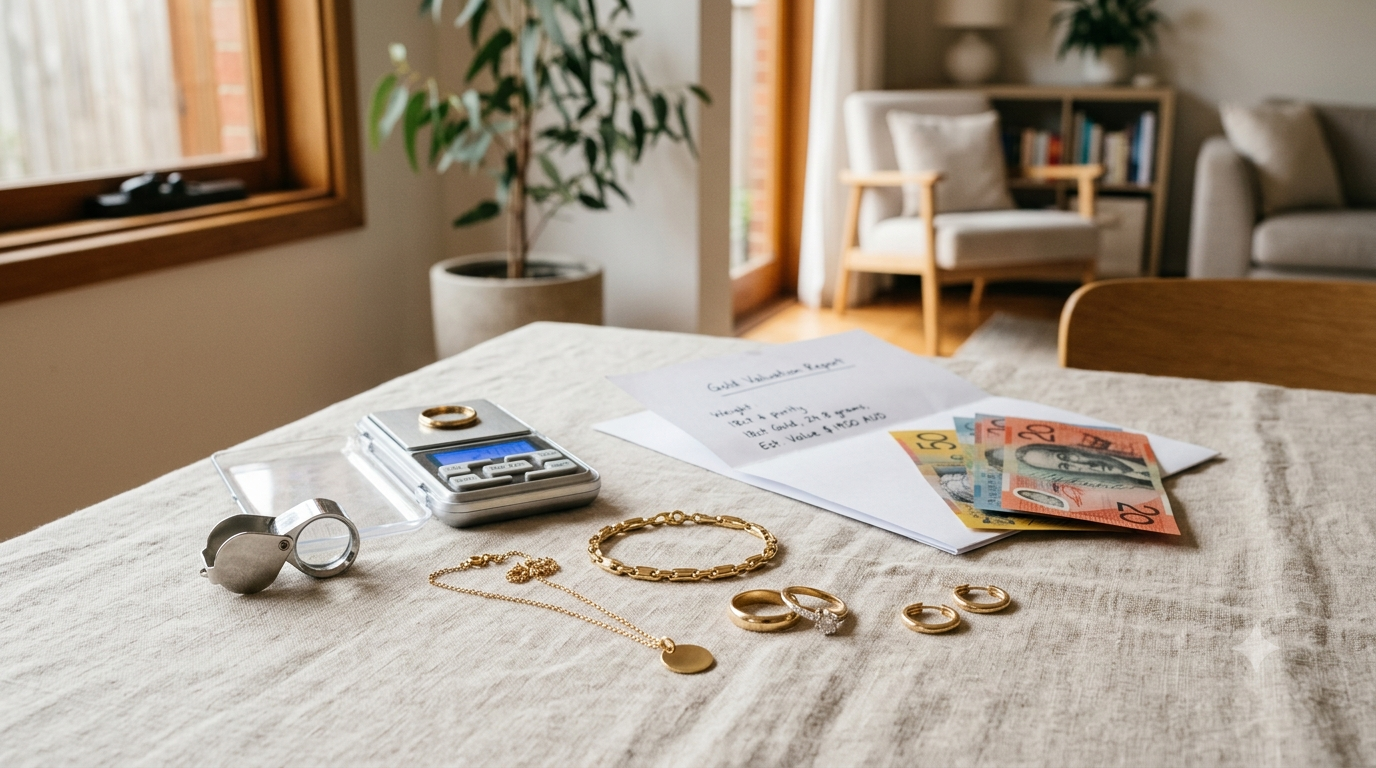
Weight × gold purity × current gold market price = estimated metal value
This is only a starting point, not a guaranteed selling price.
The jewellery may contain stones, clasps, solder or other materials that are not gold. The buyer also needs to account for testing, refining, operating costs and their business margin. Consequently, the amount you receive will normally be different from a simple spot-price calculation.
Do not remove gemstones yourself before having the complete item assessed. You could damage the piece or overlook additional resale value.
Scrap Value, Resale Value and Collector Value Are Different
One of the biggest mistakes inherited-jewellery sellers make is assuming every gold item should be valued as scrap.
There are several different ways a piece can have value:
Scrap value: Primarily based on the recoverable precious metal.
Resale value: Based on what someone may pay for the finished jewellery.
Collector value: Additional value associated with age, rarity, maker, design or history.
A signed piece from a recognised jewellery house may be worth considerably more than its melt value. Similarly, an Art Deco, Victorian or Edwardian piece may attract specialist interest because of its design, age and provenance.
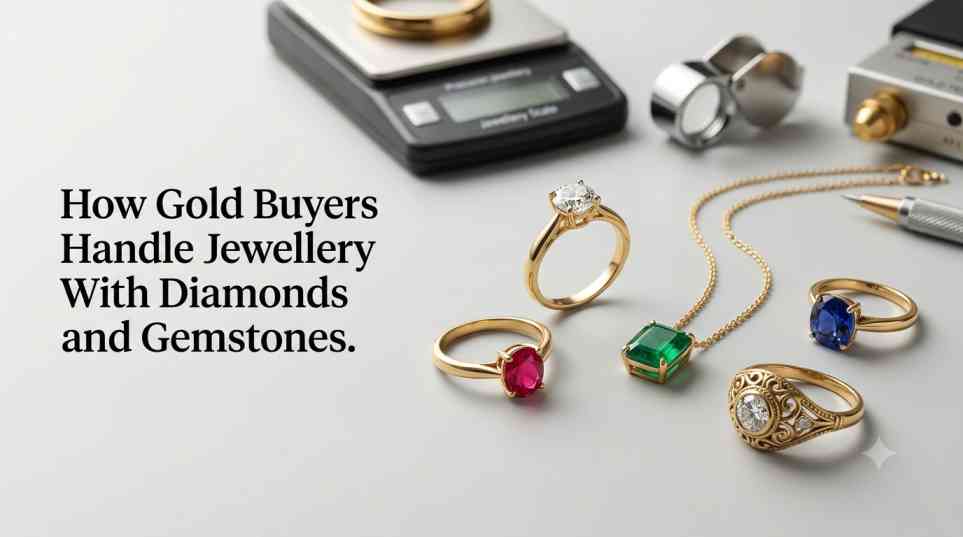
Gemstones can also make a substantial difference. Diamonds, sapphires, rubies and emeralds should not automatically be treated as having no value simply because the gold itself is being purchased.
If you're deciding where to Sell Gold Jewellery, first determine whether the item should be assessed as jewellery or primarily as scrap.
When should you get an independent valuation?
Consider an independent assessment if the jewellery is:
Branded or signed
Antique or vintage
Set with potentially valuable gemstones
Unusually designed
Accompanied by certificates or original documentation
Potentially rare or collectible
An independent jeweller or appropriately qualified valuer can help identify value that may not be reflected in a scrap-gold offer.
Online gold calculators can be useful for understanding the general relationship between weight, purity and market prices, but they cannot reliably assess craftsmanship, provenance, gemstones or collector demand.
Before visiting buyers, photograph hallmarks and maker's marks, record weights where practical, and note any visible damage, repairs or missing stones.
Step Three: Compare Gold Buyers Properly
A buyer will generally test the metal, determine its purity, assess the relevant weight and calculate an offer based on the prevailing gold market.
When comparing offers, ask:
What gold price are you using?
What purity did you identify?
How was the item weighed?
Is the calculation based on total weight or the estimated gold content?
Have gemstones or design value been considered?
Are there any fees or deductions?
What is the final amount I will receive?
Two buyers can give different offers even when looking at the same piece. Their testing methods, operating costs, margins and assessment of resale value can differ.
Choose the buyer based on the jewellery
A plain, damaged chain may be most appropriately compared on its gold content.
A wearable branded ring could be better suited to a jeweller.
A rare antique or collectible piece may warrant specialist advice or an auction route.
There is no single selling method that is automatically best for every inherited item.
Check the buyer's credentials
When selling in NSW, it is worth checking whether the business falls within the licensing requirements for second-hand dealers.
NSW Government guidance identifies jewellery containing gemstones or precious metals, as well as gemstones and precious metals, as prescribed second-hand goods. Businesses dealing in these goods may require a second-hand dealer licence, subject to applicable exemptions.
Look for a clearly identified business, a physical trading location where applicable, and transparent information about the transaction.
A buyer should be able to explain how the jewellery is tested and how the offer has been calculated.
Be cautious if someone:
Pressures you to accept immediately
Refuses to explain the valuation
Uses only a vague “today's rate”
Will not explain deductions
Refuses to provide transaction documentation
Compare the final amount, not just the advertised rate
A headline price can be misleading if you do not understand what it represents.
Ask for a clear breakdown of the calculation and compare the final amount payable. Getting two or more offers can give you a useful benchmark, particularly for straightforward scrap gold.
For unusual or valuable jewellery, however, a second valuation may be more useful than simply collecting more scrap-gold offers.
What About Inherited Gold Coins?
An estate may contain gold coins or bullion alongside jewellery.
Coins should be assessed separately because their value may come from more than their gold content. Depending on the item, factors such as purity, mint, rarity, condition, year and collector demand may affect the price.
Before you Sell Gold Coin, establish whether it is primarily bullion or whether it may have numismatic or collector value.
A specialist opinion can be worthwhile for older, unusual or potentially collectible coins.
The key principle is simple: understand what you own before accepting a melt-value offer.
Sell Safely and Keep a Clear Paper Trail
Take appropriate identification and any estate documentation that may be relevant to the transaction. If you have certificates, previous valuations, receipts or insurance records, take those too.
Avoid polishing or altering antique jewellery before it has been assessed. Do not remove gemstones or melt down a piece simply to make it easier to sell.
At the appointment:
Ask how the item will be tested.
Make sure you understand the weight and purity used.
Ask for the offer and deductions to be explained.
Obtain written transaction documentation.
Confirm the payment method.
Keep the receipt and payment confirmation.
For a large estate collection, taking a trusted family member or support person can also make the process easier.
Keep your sale records with the estate documentation. This creates a clear record of what was sold, who bought it, how much was received and how the proceeds were handled.
Gold Buyers in Mosman: How to Avoid Scams and Get Fair Prices
If you're researching Gold Buyers in Mosman: How to Avoid Scams and Get Fair Prices, the same principles apply when comparing buyers elsewhere in Sydney.
Don't choose a buyer solely because an advertisement promises the highest price.
Instead, ask how the gold was tested, what purity was established, what weight was used and whether the offer includes anything for gemstones, design or brand value.
Get the offer in writing and compare the final amount you would receive.
If the item is antique, signed, branded, rare or gemstone-set, consider an independent assessment before accepting a scrap-gold offer.
Three Common Inherited-Jewellery Scenarios
Broken 9-carat chains
Imagine an executor inherits several unbranded, broken 9-carat chains with no significant gemstones or recognised maker.
In this situation, the gold content may be the main source of value. Comparing the buyer's purity assessment and final price can provide a useful basis for deciding where to sell.
An 18-carat diamond ring
Now consider an 18-carat ring carrying a maker's mark and a diamond.
A scrap-gold offer may not reflect the complete value of the piece. A jeweller, gemstone specialist or independent valuer could identify additional value before you decide how to sell it.
Several beneficiaries disagree
If three family members inherit a jewellery collection and disagree about selling it, rushing to a buyer is unlikely to solve the underlying problem.
Create an inventory, photograph the items and obtain an independent valuation where appropriate. The beneficiaries can then make a more informed decision about keeping, distributing or selling the pieces.
Should You Sell, Keep or Auction the Jewellery?
The best outcome may differ from one item to another.
Sell for its gold content when a piece is plain, damaged and has little apparent resale or collector demand.
Sell as jewellery when the item is wearable and its design, brand or gemstones may attract a buyer.
Consider an auction or specialist sale when the item is rare, antique, signed or potentially high value.
Keep or remodel it when the emotional value is more important than the financial return.
Before deciding, ask:
Is the item branded or signed?
Does it contain potentially valuable gemstones?
Is it antique or collectible?
Is it in good condition?
Does a family member want to keep it?
Has anyone independent assessed it?
Have you compared appropriate offers?
The plainer the item, the more important the gold purity, weight and buying rate tend to be. The more unusual the item, the more important specialist assessment becomes.
Sell Inherited Gold Jewellery in Sydney With Confidence
Selling inherited jewellery does not have to be rushed.
Start by confirming who has the authority to sell. Catalogue the pieces, check their purity and condition, and identify anything that could have value beyond its gold content.
Then compare suitable buyers and ask exactly how each offer has been calculated.
Most importantly, don't assume every gold item is scrap. A plain broken chain and a signed diamond ring may both contain gold, but their potential value and the best way to sell them can be very different.
A careful assessment can help protect the financial value of the inheritance while also reducing the risk of family disagreements or an unnecessarily low sale price.
Frequently Asked Questions
Is inherited gold jewellery worth more than its scrap value?
It can be. Plain or damaged jewellery may be valued mainly for its precious-metal content, while branded, antique, signed or gemstone-set pieces may have additional resale or collector value.
How can I tell if a gold buyer's offer is fair?
Ask what gold price, purity and weight the buyer has used and whether any deductions apply. Comparing multiple suitable offers can help, but unusual jewellery should also be assessed for potential resale or collector value.
Should I get inherited jewellery valued before selling it?
For antique, branded, signed or gemstone-set jewellery, an independent valuation can be worthwhile. It may identify value that would not be included in a straightforward scrap-gold calculation.
Do I pay tax when I sell inherited jewellery?
Not necessarily. Inheriting an asset generally does not itself mean tax is payable, but CGT can potentially arise when an inherited asset is later disposed of. Jewellery can fall within the ATO's collectables rules, so the tax outcome depends on the particular circumstances.
What documents should I keep when selling inherited jewellery?
Keep relevant estate documents, previous valuations, receipts, certificates, photographs and the final sales receipt. Good records can make it easier to establish the item's history and document how estate assets were dealt with.
Can I sell inherited jewellery if several beneficiaries are involved?
If several people have an ownership or beneficiary interest, the sale should be handled consistently with the estate arrangements and the rights of those involved. If there is disagreement, obtain appropriate legal advice rather than assuming one beneficiary can sell the jewellery alone.
Should I remove gemstones before selling gold jewellery?
No. Removing stones yourself could damage the piece and may eliminate potential resale value. Have the complete item assessed first.
How do I avoid problems when selling gold in Sydney?
Use an established buyer, ask how the item is tested, request a clear explanation of the offer, check applicable licensing requirements and keep written records of the transaction. Avoid pressure to accept an unexplained offer immediately.
Is it better to sell inherited gold immediately?
Not necessarily. While gold prices move over time, rushing can also mean overlooking gemstone, brand, antique or sentimental value. Taking time to identify what you own can lead to a better-informed decision.
Should I sell every inherited jewellery item to the same buyer?
Not necessarily. A buyer suitable for straightforward scrap gold may not be the best option for an antique, branded or gemstone-set piece. Assess each item according to its characteristics and potential value.
Important: This article provides general information for Australian readers and is not legal, financial or tax advice. Estate and tax circumstances can vary, so professional advice may be appropriate for complex or high-value situations.
Written By
Team Times&Gold
Journal Insights
Visit Us in Parramatta!
NO APPOINTMENTS NEEDED!
Located inside DLUX Jewellers
Opposite Commonwealth Bank